

How Fishwife builds momentum through newness
I talk to the tinned fish brand about how a marketing calendar "stacked with exciting new moments" fuels their social media strategy.

Good morning! While reflecting on the past five years of writing Link in Bio, I realized I haven’t been great about taking time off. Next week there will be no newsletters while I attempt to reduce my screen time and actually read a book. I’m thinking George Saunders’ A Swim in a Pond in the Rain after Zach Fried from Craighill recommended it here. I’ll still be hanging in the Link in Bio Discord, so if you’re a paid subscriber, I’ll see you there.
In today’s newsletter, I talk to the Fishwife team. I’ve written about the colorful tinned fish brand a handful of times, covering their carousel strategy and TikTok Shop presence, but have never done a deep dive. It’s an interview that’s long overdue. Below you’ll hear from Becca Millstein, Co-Founder and CEO of Fishwife (who also oversees company leadership and brand marketing!), and Lauren Murphy, Senior Brand Marketing Manager, on their social media playbook. We cover why all carousels need a good hook, the online trend that’s showing up “explicitly” in product sales, and how the team builds social momentum through newness.
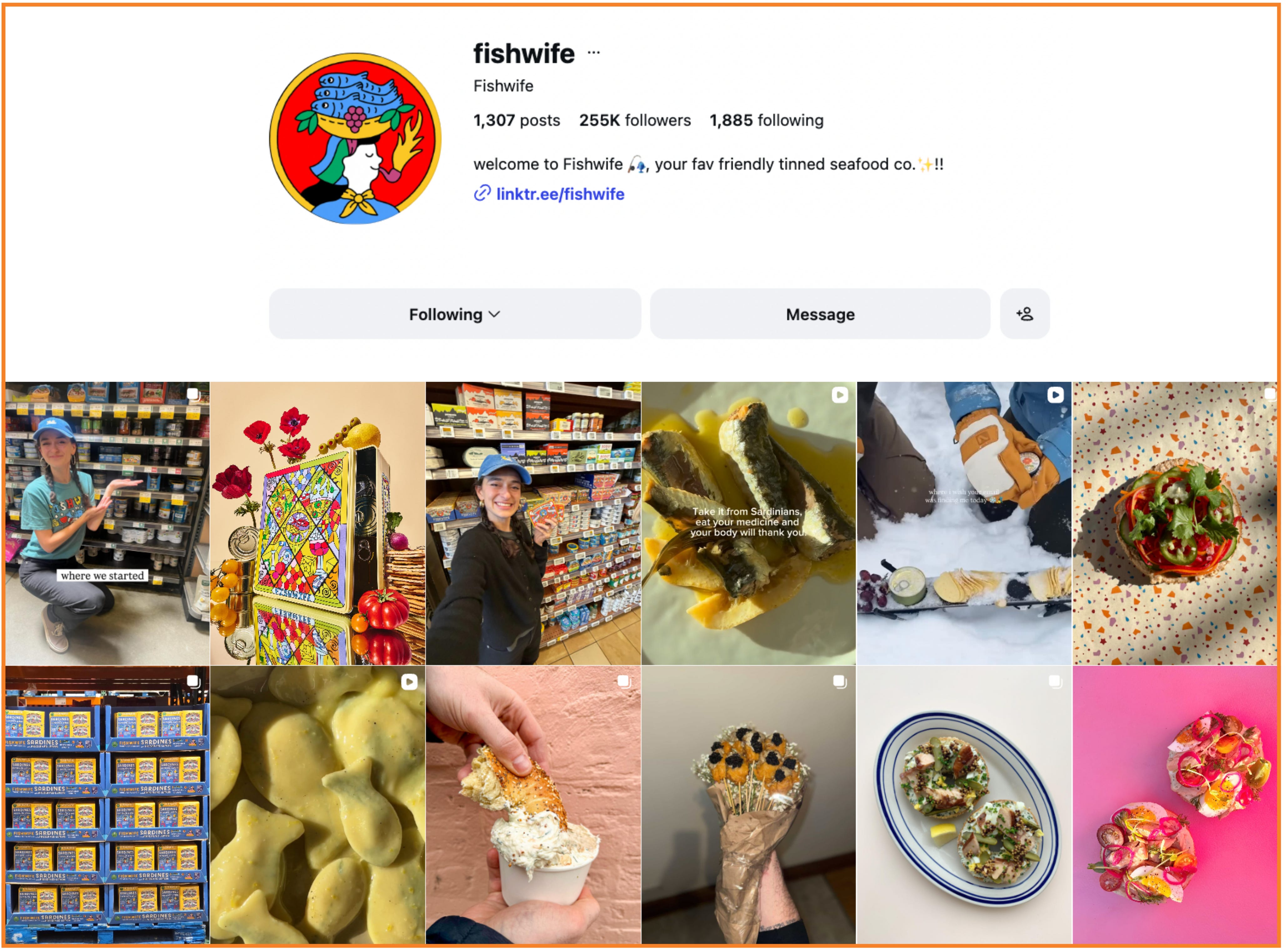
Rachel Karten: If you had to sum up Fishwife’s social media philosophy in a sentence or two, what would it be?
Lauren Murphy: Fishwife’s social media philosophy is rooted in making people ~feel~ something, blending emotional consistency with a warmly irreverent, funny (humble brag), and community-obsessed voice. Across every touchpoint (whether a recipe, meme, or retail announcement) the goal is to make tinned fish feel fun, culturally relevant, and deeply human.
Becca Millstein: I also think of Fishwife’s social media as the diary of our extremely dynamic, maximalist company story. So while our platforms have unique content and voice, I also see them as vessels for all of the new products, ideas, events, retail launches, partnerships, initiatives, etc. which breathe so much life into these platforms.
Rachel: What platform would you say has been the most impactful for Fishwife’s growth?
Lauren: Instagram and TikTok have both fueled Fishwife’s growth—but in different ways. Instagram lets us engage deeply with our community, while TikTok helps us reach new audiences and tell our stories to people who might not know us yet.
Becca: I agree with Lauren overall. I’m biased because I started building the company’s social media presence on Instagram (and barely touch TikTok), but I think the connections forged on Instagram over the years in DMs have had a massively duplicative effect on the company’s community and customer base. Ever since the beginning, we’ve maintained such personal relationships on Instagram, and that closeness engenders at least some degree of brand loyalty, passion, and word-of-mouth.
Rachel: Becca, what role do you see yourself playing in the Fishwife social media ecosystem? You show up quite a bit on the feed!
Becca: I told Lauren she didn’t have to answer this one but now I’m wishing I hadn’t, because she’s the one responsible for smearing my mug all over Fishwife’s social media!! As we all know too well, founder-led companies tend to lean into being founder-led, and for good reason. A face makes a brand more relatable, easier to root for and all-in-all is an unfair advantage against other companies that might lack an origin story or founder character to loop the story of the brand back to.
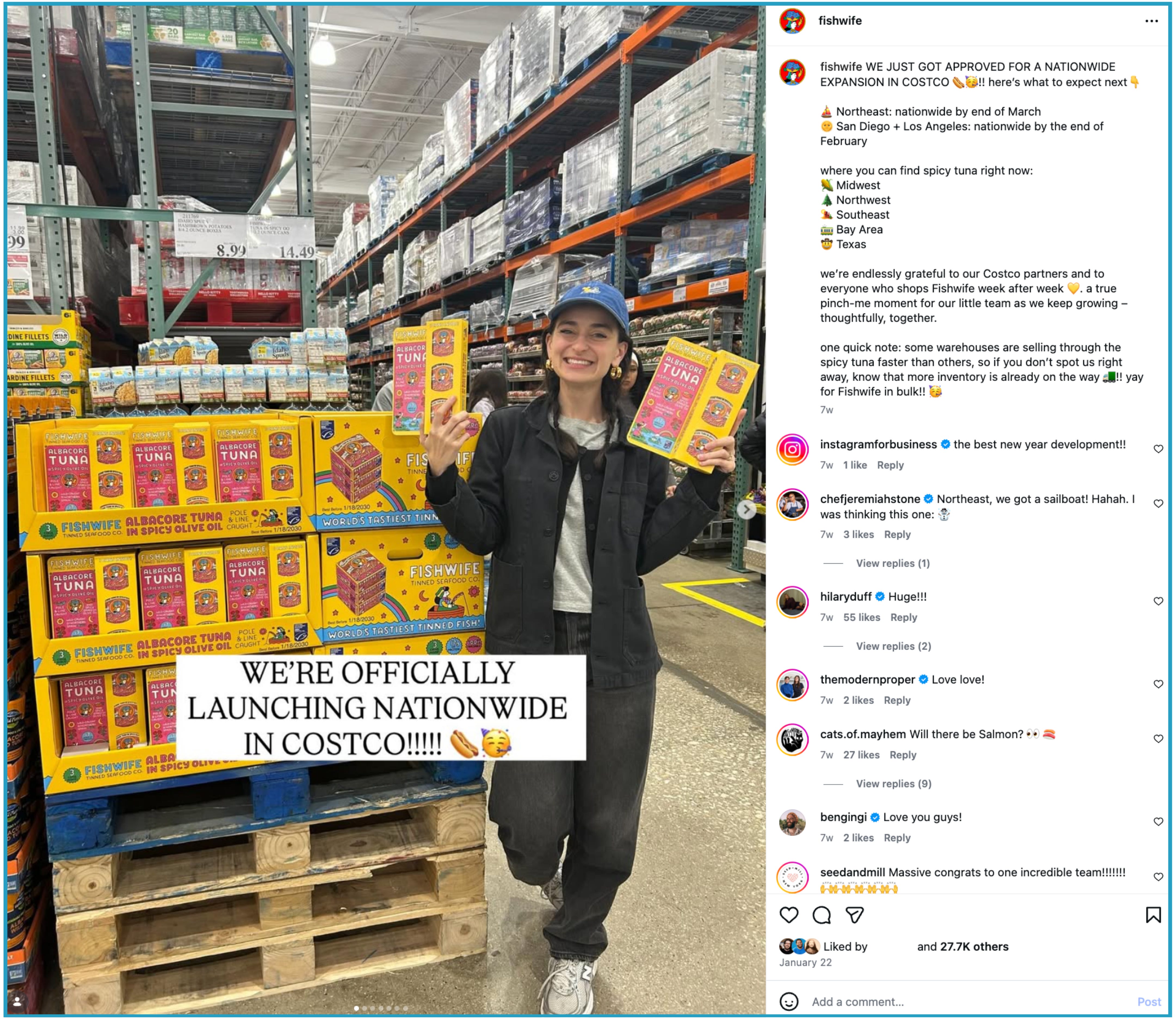
Rachel: I’ve talked a lot about how important product newness is on social media. So much of what people are reacting to when they say they love a brand’s social presence are those big announcements and partnerships. Your team is really good about this. How often would you say you’re announcing something new? And would you say that newness is a big piece of your overall social strategy?
Becca: Momentum is everything in brand-building. People want to engage with brands and companies that are actively and enthusiastically engaging with them. To us, engaging with our customer base means consistently talking to them to understand what they want to see from us (we’re big survey people), and then bringing their (and our) visions into being.
Our first company core value (we have four and we really live by them) is “Build a delightful world.” This relates to both our customer and our team—there’s nothing the Fishwife team loves more than coming up with a wild idea and bringing it to fruition. It delights us to make delightful things! In turn, our customer base derives so much energy and joy from all the newness—whether it’s a new tinned fish product, a long sleeve t-shirt (shhh!), a pop up, or a one-off cobranded demo at Whole Foods.
The company is a living, breathing organism, and our constant newness is the expression of that lifeforce!! Big caveat—we also really try not to fatigue our base. It’s a delicate dance.
Lauren: About 75% of my role (with Becca’s support) is dedicated to planning and executing newness. Whether it’s a new tin launch, a small merch item, or a bigger brand partnership, our marketing calendar is always stacked with exciting new moments (at least 1x/month).
Rachel: Is there a specific post or announcement you recall driving meaningful sales? Why do you think it worked?
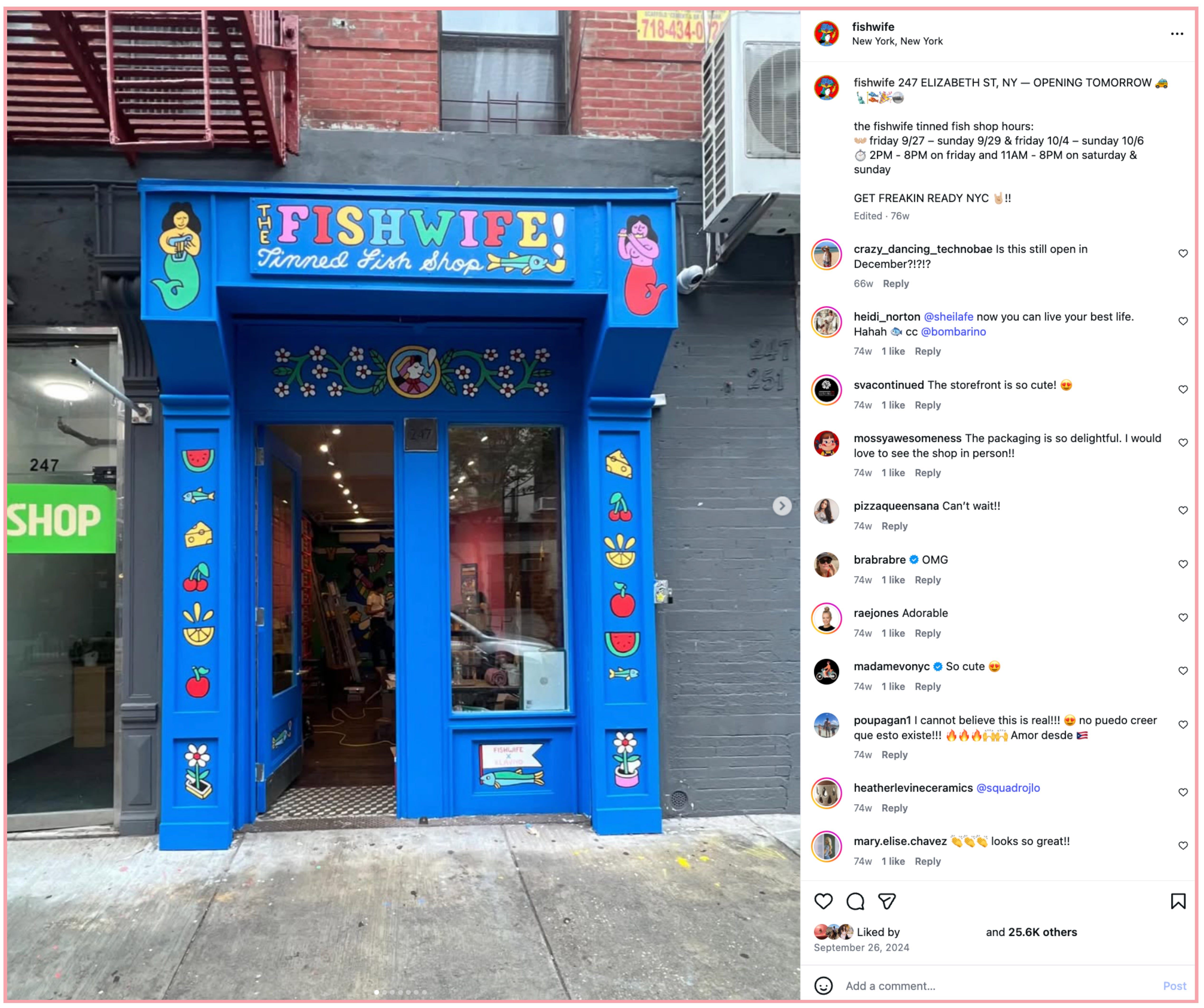
Lauren: It’s hard to say which individual posts drive sales, so I usually look at retail launches as a clearer signal. Our first Costco announcement is a standout. We first announced our Midwest rollout, and the number of organic UGC posts was a strong early indicator of excitement. One of our CTAs was to fill out a Costco request form (to request Fishwife at your local club), and so many sweet people submitted that Costco had to email us multiple times asking us to pause promotion—oops! The bigger takeaway is that Fishwife has been thoughtful about launching in retail when demand exists, rather than jumping in too early. That timing has been a key part of why our retail expansions work so well.
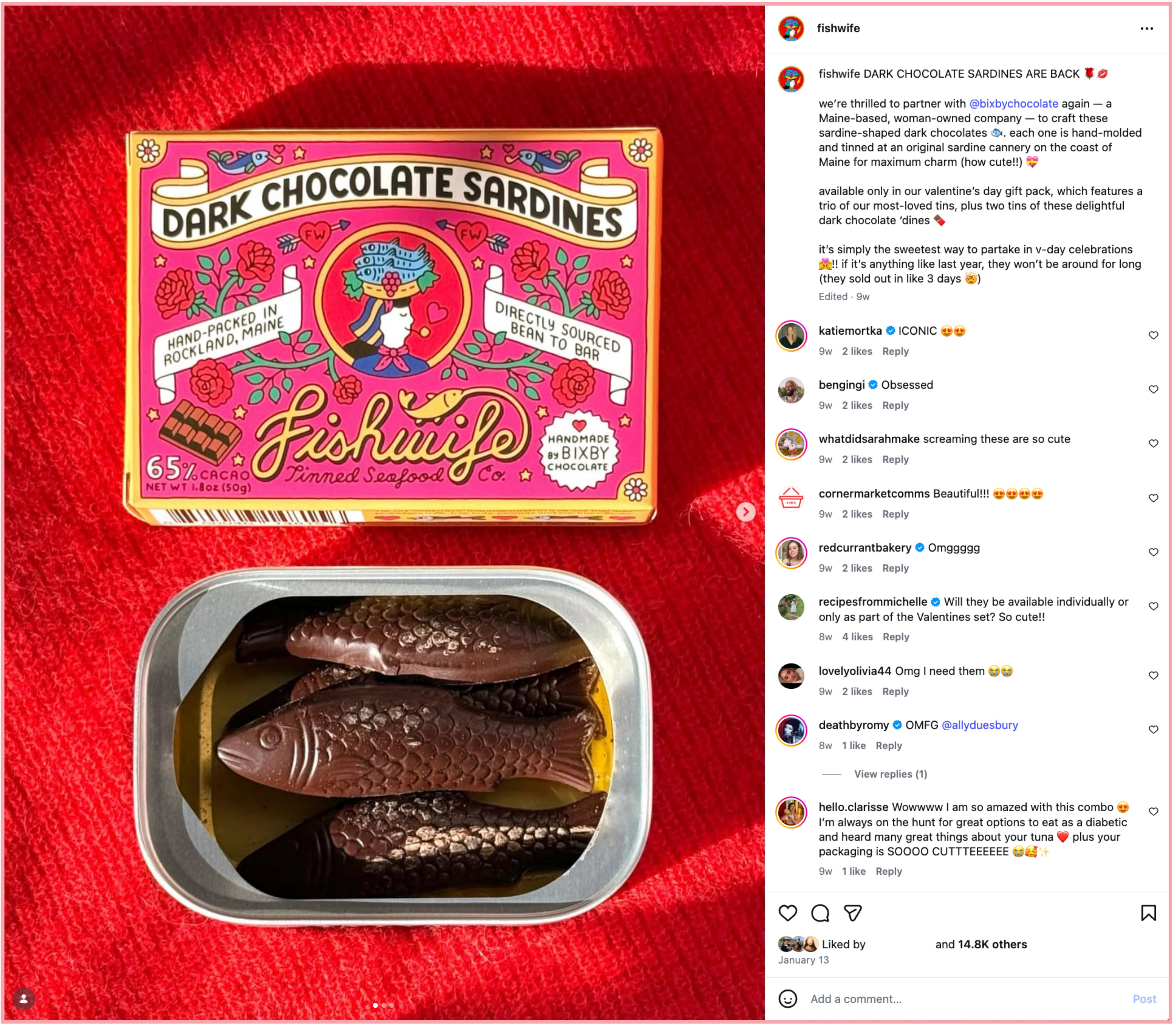
Becca: I remember that we launched the our Valentine’s Day chocolate sardines over email and SMS in the morning, and sales were doing solidly, but when we posted on IG, they popped off. There are certain items—tinned fish, merch, or anything in between (like choco sardines)—that we know are really going to resonate on social. If the price point is approachable, like it was with the chocolate sardines, conversion from social is much likelier to be high.
Rachel: How do you interact with “trends” within the category? It seems like tinned fish is having a moment every month.
Lauren: We’re not chasing trends, but we think strategically about how to stay top of mind when tinned fish moments happen. That means building strong relationships with creators who are shaping the conversation, staying present in the cultural conversation, and making sure our brand voice and story are visible—so when interest spikes, Fishwife is already part of the conversation!
Becca: I’m obsessed with talking about tinned fish trends, because we’ve basically had a new one or two every year since 2021 and it’s so fun to watch (especially when you’re running a tinned fish business). 2026 is just…sardines!! How healthy they are, how they make your skin glow. We’ve never had a trend show up so explicitly in our sales.
Rachel: Wow. What has the jump in sardine sales been?
Becca: On the retail side, our baseline unit velocities 3x'd between Q4'25 and Q1'26, and 2x'd on DTC.
Rachel: I’ve written about how Fishwife’s carousels are best in class. Do you have any tips for making sure they are shareable and engaging?
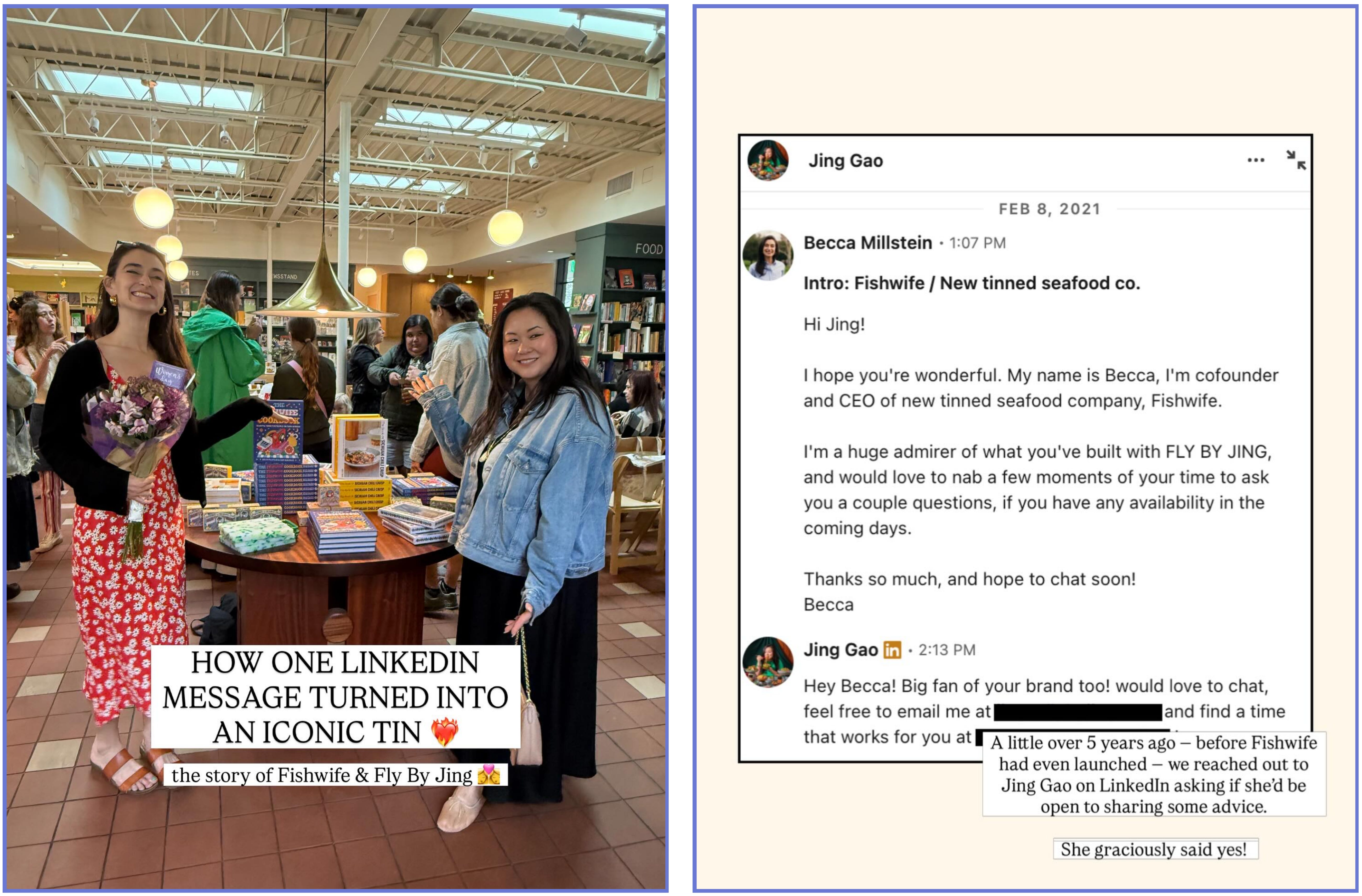
Lauren: Carousels have always been Fishwife’s bread and butter, but we don’t create them just to fill the feed—they’re designed with purpose.
Every post starts with a strong hook and a clear reason for someone to swipe to the next slide. For more complex stories, like sourcing content or nuanced rollouts (like this or this), we layer in text overlays, music (which I spend way too long picking 😅), and pacing to make the story easy to follow and engaging.
I would think of each carousel as a mini narrative: plan why someone should keep swiping, make each slide meaningful, and use format elements strategically to tell the story in a way static posts alone can’t.
Rachel: I can’t stop watching Toni Bravo’s videos about tinned fish. Do you have any tools you love or helpful tips for finding influencers and creators to gift and work with?
Lauren: Toni!!! An angel. As longtime fans, we’re overjoyed seeing all the love she’s getting. She’s built such an magical moment around tinned fish, and we’re so, so grateful to be part of it.
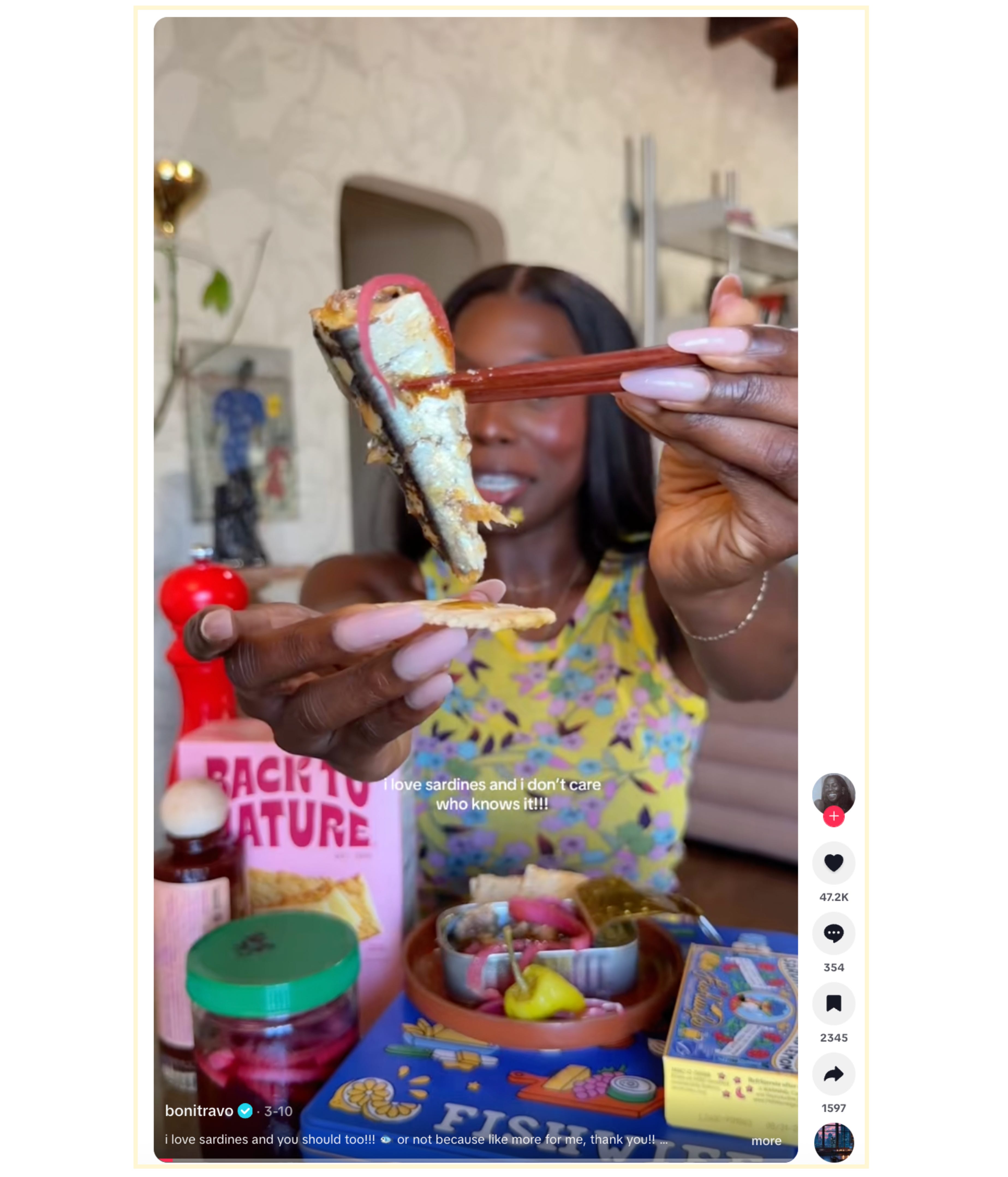
In terms of how we think about creators, we keep it pretty simple and really relationship-driven:
We prioritize creators who already have a genuine food ritual. It’s less about size and more about behavior: are they already building snack plates, cooking with tinned fish, etc.
Most of our discovery is actually organic. We’re lucky to get a ton of inbound love, so a lot of our relationships start from a really genuine place, people who are already part of the Fishwife universe.
From there, we lean heavily on gifting and our affiliate program. Typically, the people we invest in are folks we’ve already seeded and built a relationship with over time. Up until about a year and a half ago, we weren’t spending much (if anything) on influencer marketing, and even now, we’re very intentional about it.
For us, it’s less about “finding” creators and more about paying close attention to who’s already showing up for us, and then nurturing the heck out of those relationships.
Rachel: Sourcing is a big piece of the Fishwife story—and you do a great job of telling it. Many brands struggle to make that style of content engaging. How do you get it to resonate with audiences?
Lauren: Becca and our Head of Ops, Jack, visit our cannery partners across Europe every summer so to say I’m spoiled with incredible sourcing content is an understatement. We focus on bringing humanity into the process: showing our cannery partners faces, sharing their names, and giving real visibility into the hands that bring each tin to life. Paired with thoughtful, story-driven carousels, it makes sourcing feel personal instead of just a step in the supply chain.
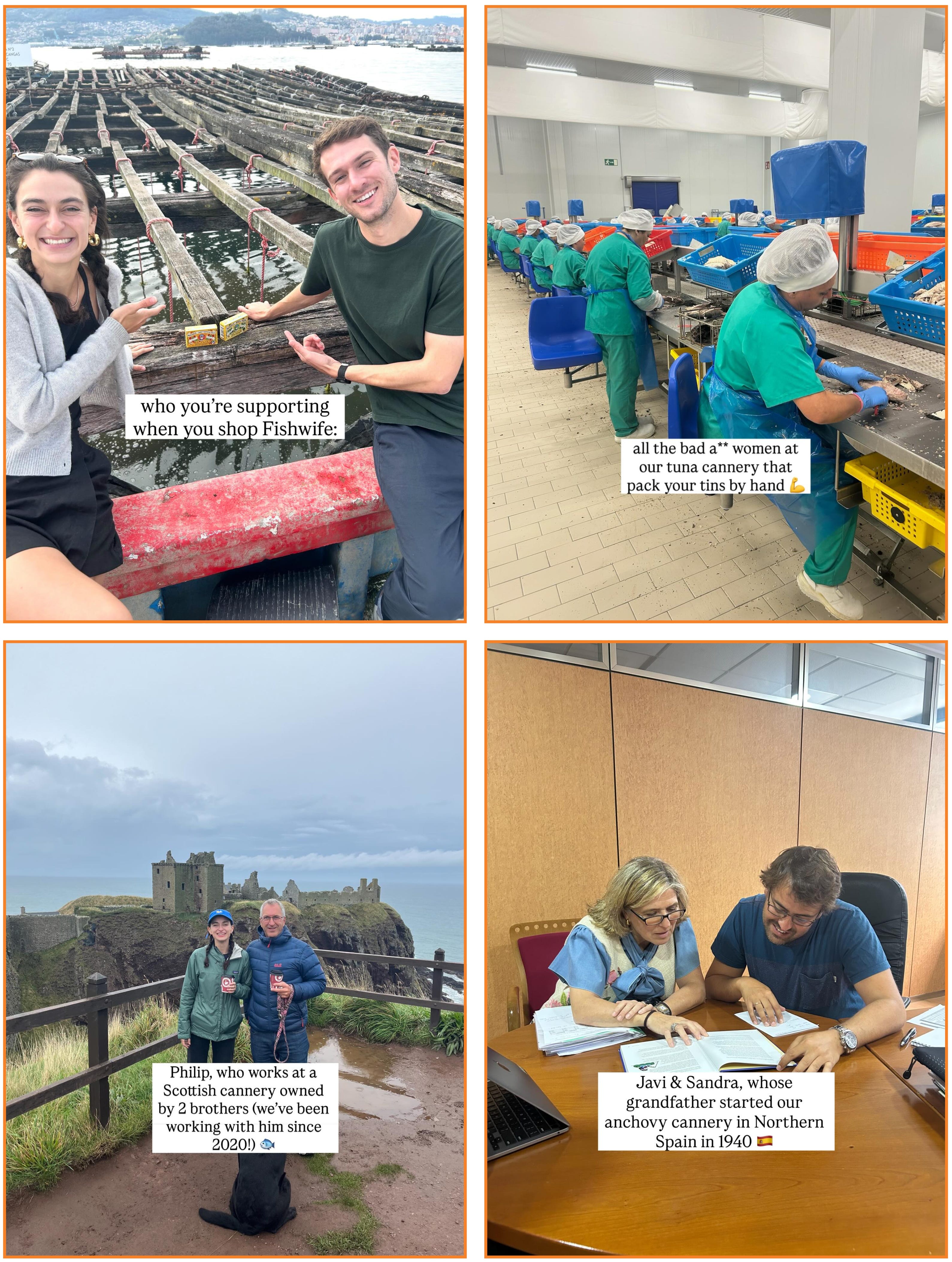
Becca: For most folks, seafood and its supply chain feel incredibly foreign and intimidating. This is where putting faces to the brand really helps, it brings the customer closer to the source. Instead of a stock photo of tuna swimming in open water, it’s a picture of me and our head of ops breaking bread with our cannery partners in Spain, Washington, Scotland, Denmark, Norway. All of them grew up in the regions we source from. For many, their ancestors founded the cannery, their families have spent generations carefully tending relationships with local fishermen and olive farmers. It’s just so much more human, much easier to envision and understand.
Rachel: What advice would you give a food brand that’s struggling to break through on social right now?
Lauren: Prioritize emotional consistency over aesthetic perfection or chasing trends—people follow brands that make them feel something, consistently. That consistency isn’t just about what you post or how often you post, it’s about how you show up in conversation, too. The brands that win aren’t treating social like a distribution channel, they’re treating it like a conversation. If you’ve DM’d with a customer or creator a few times and they still don’t know your name, something’s not right.
Last tidbit! Sometimes there an opening in the social calendar and I just can’t think of what to post for the life of me, so I don’t. Showing up with intention matters more than just showing up for the sake of it.
Becca: Such good advice from Lauren!!
Authenticity is the be-all, end-all. Start with what your “unfair advantages” are and build your strategy off of those. If you’re a founder-led brand, recognize that as an advantage and lean in. Important caveat—this does not mean that you have to become a founder-creator. In fact, I’d advise against that (one woman’s opinion, but who’s got the time!?). What I mean is that because you’re starting the company, you almost can’t help but be authentic in your vision and your voice. OR, is your unfair advantage that your product has a really cool production process or sourcing narrative? Then lean in there! Do you have a teenage cousin who’s really good at memes? Do you have someone on your team that writes really funny Slacks? It can be anything, but finding your special little golden nugget, and leaning in there, usually yields positive results.
And if you’re being authentic, you don’t have to worry about being precious. We’re chaotic, and all-over-the-place, and share a million different types of content—but we know who we are, we all embody the Fishwife brand, so it all works out in the end.
Five takeaways from my conversation with Fishwife
Start carousels with a strong hook and a clear reason for someone to swipe. “I would think of each carousel as a mini narrative: plan why someone should keep swiping, make each slide meaningful, and use format elements strategically to tell the story in a way static posts alone can’t.”
Newness builds momentum. “Whether it’s a new tin launch, a small merch item, or a bigger brand partnership, our marketing calendar is always stacked with exciting new moments (at least 1x/month).”
Tinned fish trends have real impact. The online conversation around sardines showed up in Fishwife’s sales. “On the retail side, our baseline unit velocities 3x’d between Q4’25 and Q1’26, and 2x’d on DTC.”
Nurture your existing fans. “For us, it’s less about ‘finding’ creators and more about paying close attention to who’s already showing up for us, and then nurturing the heck out of those relationships.”
Prioritize emotional consistency over aesthetic perfection or chasing trends. “People follow brands that make them feel something, consistently. That consistency isn’t just about what you post or how often you post, it’s about how you show up in conversation, too. The brands that win aren’t treating social like a distribution channel, they’re treating it like a conversation.”
One more thing!
Final reminder that all annual subscriptions to Link in Bio are 20% off until Friday. That’s $16 off, or two free months. The paid tier gets access to weekly strategy emails, quarterly trend reports, the running list of post ideas, and an invite to the Link in Bio Discord. Upgrade your subscription here.
So good- thank you, Rachel, for sharing this, and Lauren and Becca, whose passion and genuine desire to delight come across so clearly. I don't think you can fake this, and I am convinced this is a superpower that many others just don't have.
Really enjoyed reading this, when you have a social media philosophy it really comes through in the content