

CMO of FIGS: “Social is where our brand breathes”
I talk to Bené Eaton, CMO of scrubs brand FIGS, about designing a tux for Noah Wyle, why the brand has an in-house film team, and the unexpected campaign metric she tracks.

If you read this newsletter with any amount of regularity, you already know that I think the scrubs brand FIGS has a great social presence. Not because they post all the time or participate in every trend, but because they show restraint. When so many brands are throwing spaghetti at a wall, FIGS is throwing darts at a bullseye.
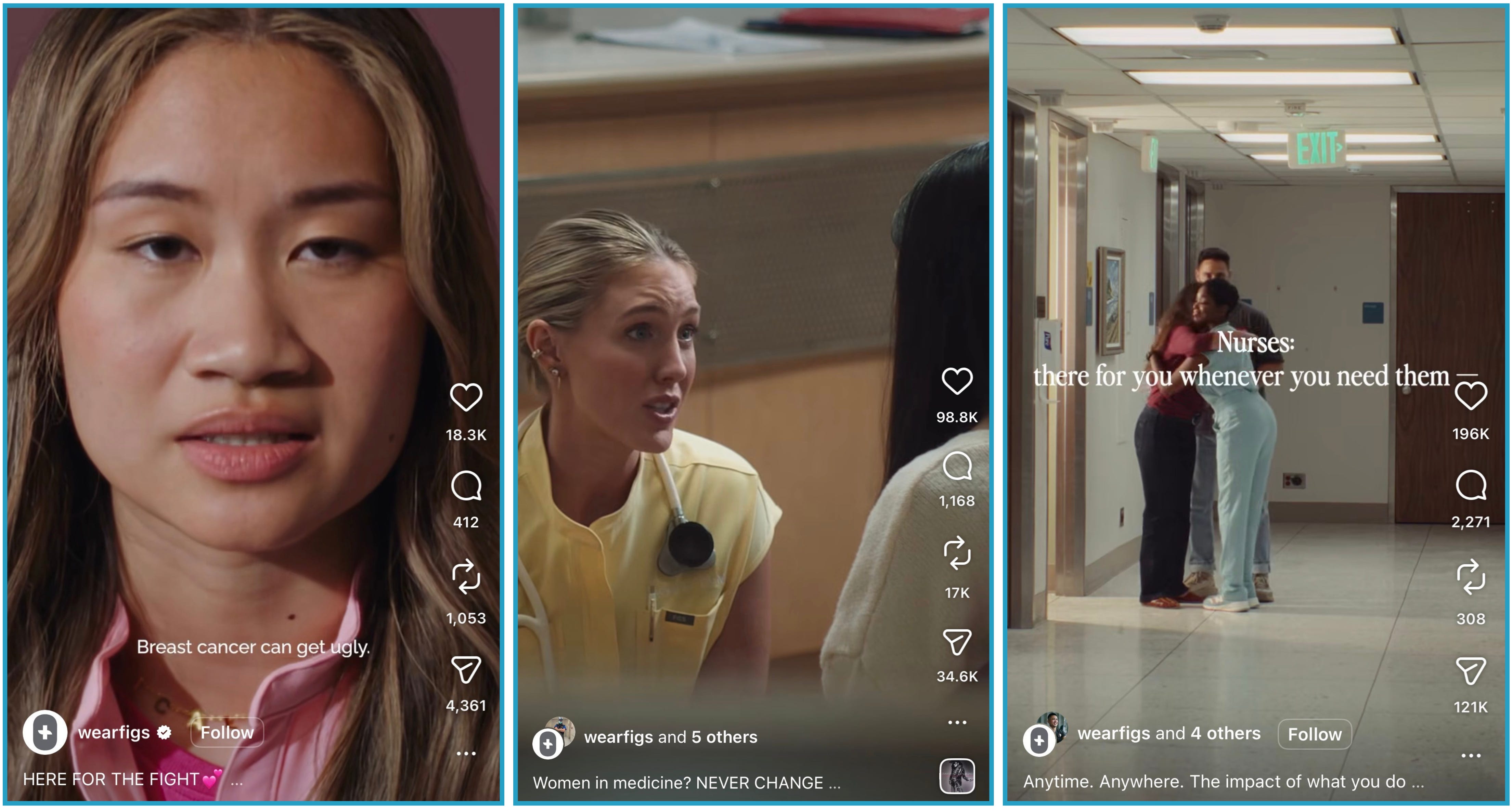
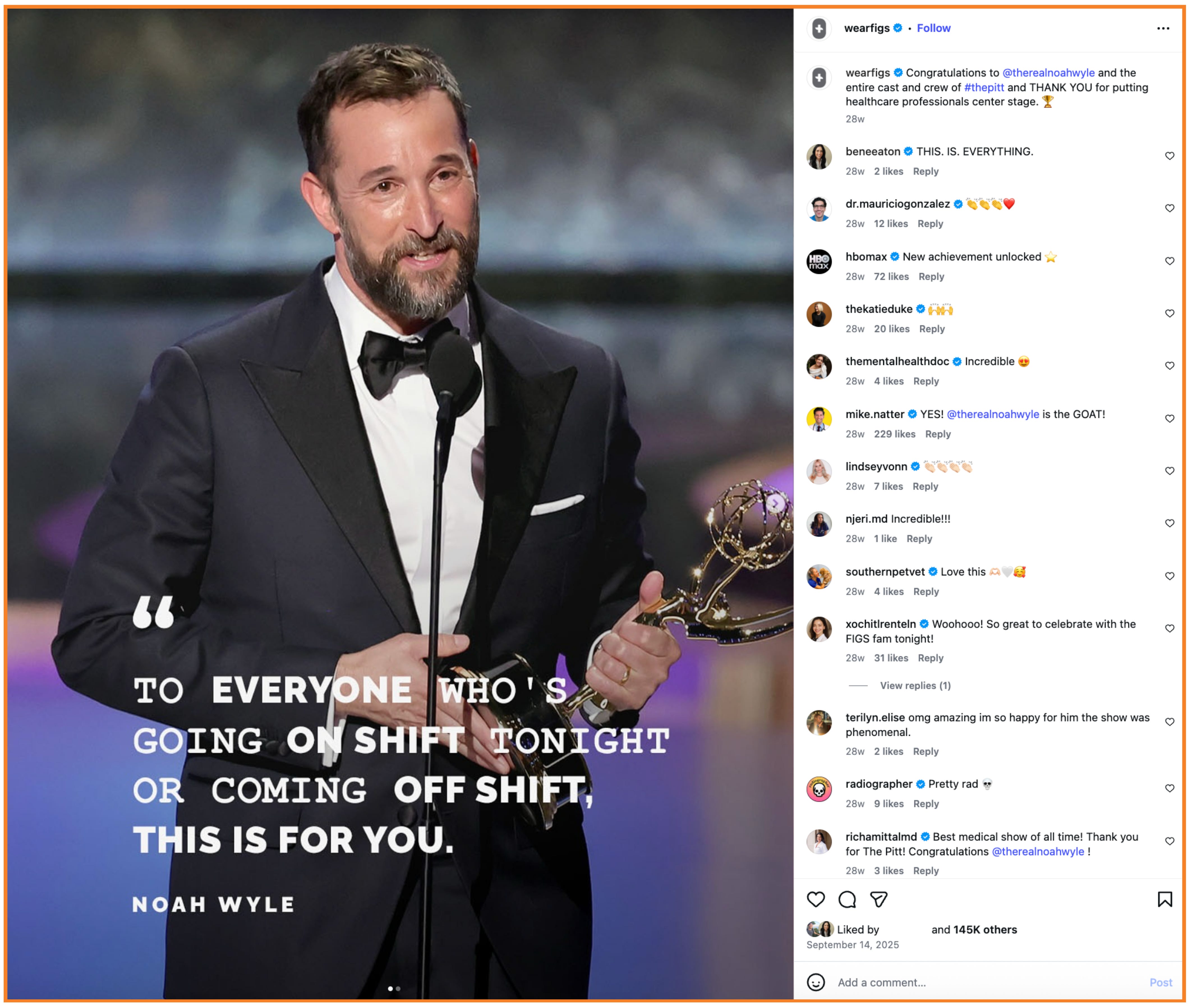
The brand’s recent Women in Medicine campaign, which features Lenny Kravitz’s It Ain’t Over ’til It’s Over, has 4M views and 34K shares on Instagram. They worked with The Pitt’s Noah Wyle on a custom FIGS tuxedo that he wore to the Emmys. They recently helped develop the Healthcare is Human Act, a bipartisan bill that would provide a federal tax credit of up to $6,000 per year to healthcare professionals serving communities most impacted by shortages. The emotional truths in their holiday film led to over 143K likes. They showed up with a coffee truck at the New York nurses’ strike.
While many of the examples above are expressed on social media, I’ve worked in this industry long enough to know that’s not where they all started. These are clear reflections of how the entire marketing organization operates—a team that takes risks and acts with purpose. Want to be a social-first brand? Start with marketing leadership.
That’s why for today’s newsletter I wanted to talk to Bené Eaton, the CMO of FIGS, about her approach to big brand moments. She’s held marketing roles at places like Nike, Ralph Lauren, and Under Armour. She also reads Link in Bio.
Below we talk about the unexpected campaign metric she tracks, how the brand uses music as an “emotional shorthand”, and the advice she’d give a social media manager who wants to be in her role one day.
Rachel Karten: What role does social media play in your position as CMO of FIGS?
Bené Eaton: Social is where our brand breathes. Alongside in-person connections, social is where we listen, learn, and reflect our community back to itself.
I think what makes the healthcare community so unique is that they have so many lived experiences and they share those experiences online—their highs, their lows, the intensity of what they go through every day. Social gives us a space to connect with them. And then, of course, to also share their stories. It’s central to everything we do.
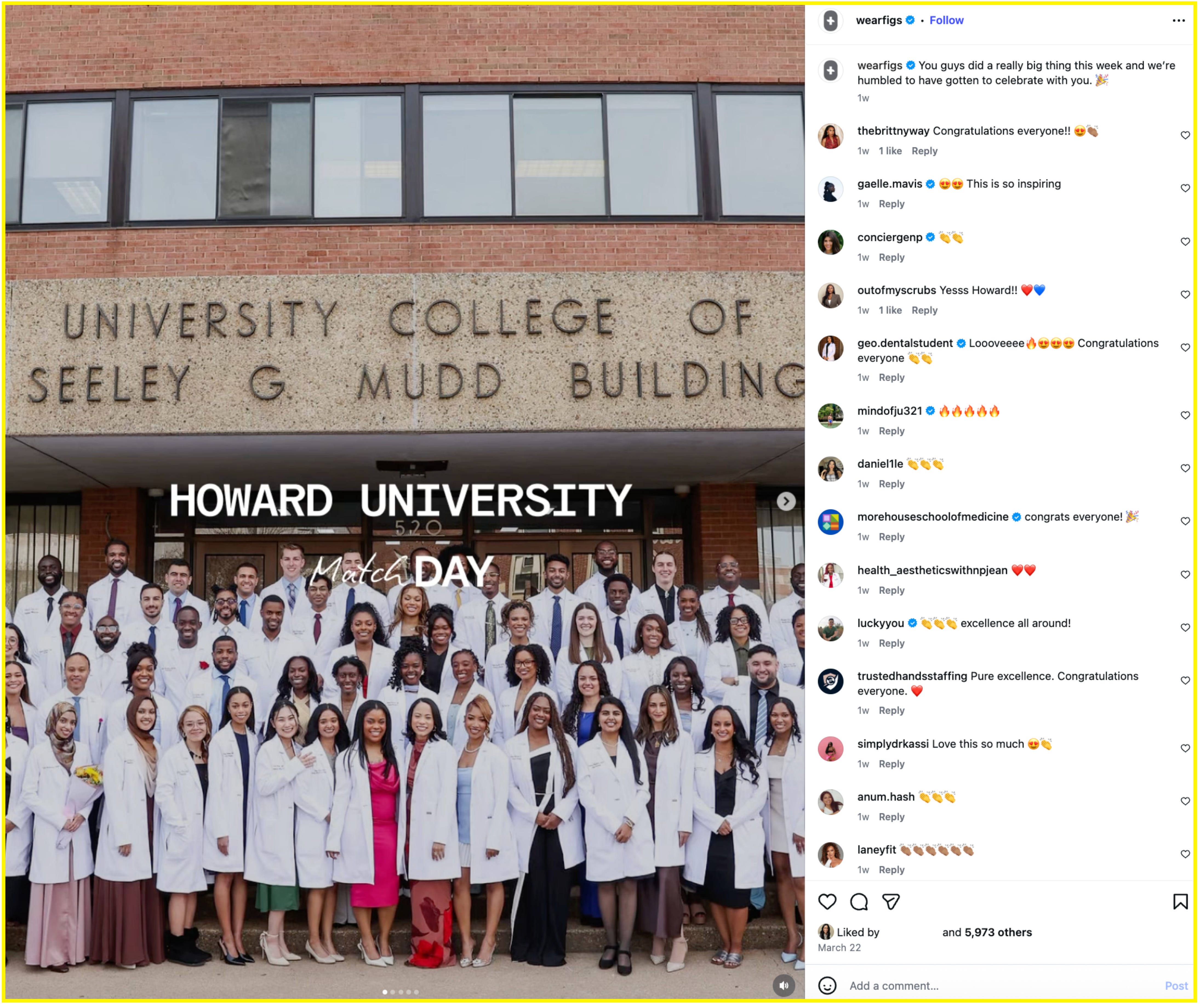
Rachel: What I love about FIGS on social is that it’s less about the technical qualities of the scrubs, and is more about a celebration of healthcare workers. If you work in healthcare, you want to follow FIGS. How intentional is that positioning?
Bené: 1000%. Everything we do is about telling the story of the people who are wearing FIGS.
I love that you say it feels like a celebration. I mean, that’s the best compliment. Our mission at FIGS is to celebrate, empower, and serve healthcare professionals. And so it’s awesome that you see our social as the living embodiment of that mission.
I think for us, in culture, we’re used to seeing celebrities revered. Or even in my past life, coming from Nike and Under Armour, you see athletes put on center stage and billboards. Our founders, Heather and Trina, even from the beginning, they asked themselves, “What about the people who are saving lives? Who’s telling their story? They are doing the world’s most important work. They’re curing diseases, they’re researching, they’re literally saving people’s lives every minute of the day. And so why aren’t they celebrated?” That’s really the intent of what we try to do in all facets of our branding and marketing, but social really is the embodiment of that.
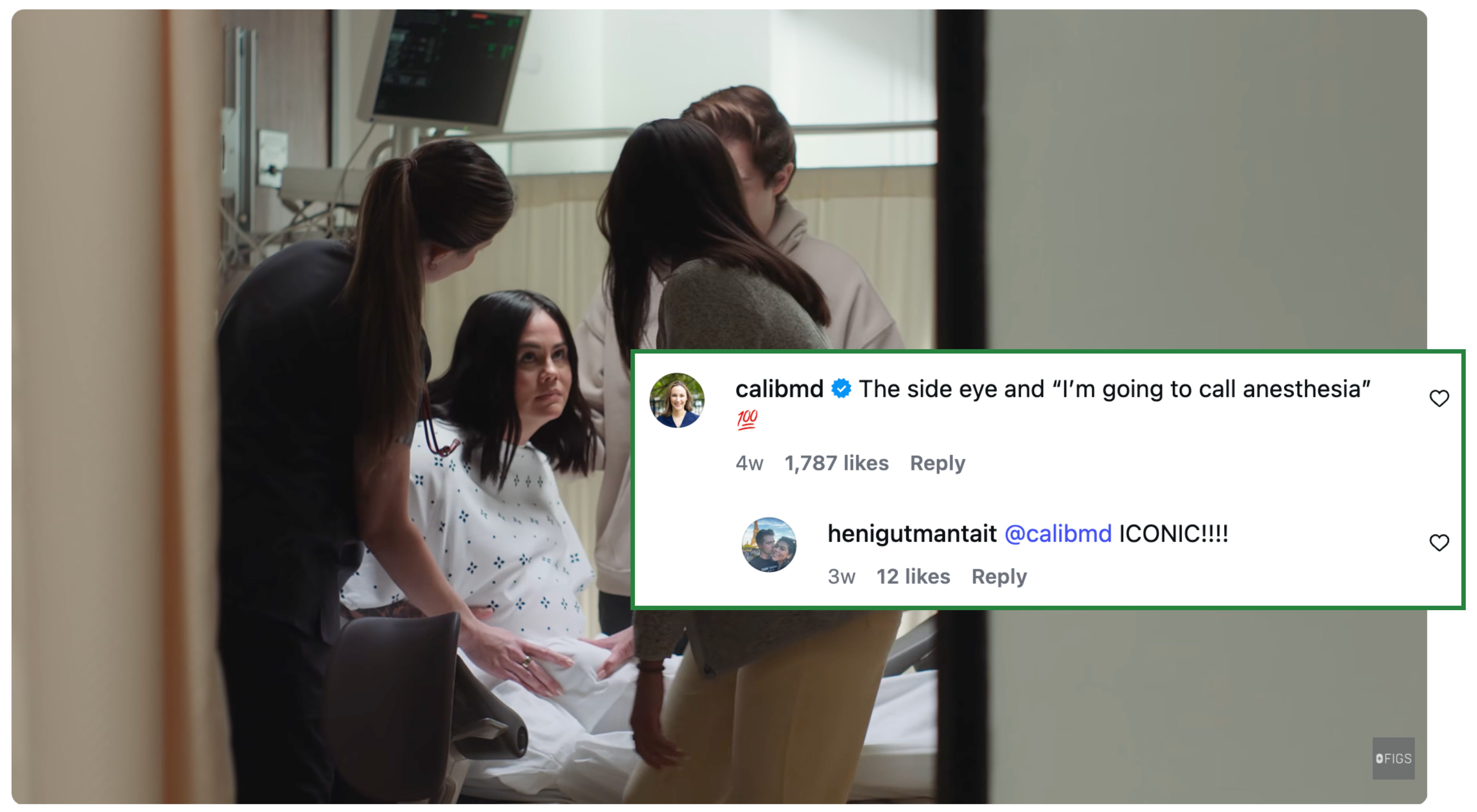
Rachel: There’s also an amazing specificity to your campaigns. In the recent Women in Medicine campaign there’s a subtle eye roll and line about epidurals that your audience all picks up on in the comments. Do you have healthcare professionals who are on the marketing team or brainstorming with you?
Bené: We are genuinely obsessed with the healthcare community. We have what we call an Ambassador community. These are a group of healthcare professionals and their full-time main job is working as a healthcare professional. We have about 500 of them globally. We lean on them for all of our sort of insights and really try to understand what they’re going through.
With the women in medicine film, every single scene that we shot came from an actual story. We sat with all of the women that we were going to feature and we were asking them about the types of scenarios they’ve been in. So we captured that. When we rolled cameras, we told them to do what they would normally do in the office and relive the experience they shared.
Those details matter, like the eye roll or those little vignettes that we capture. I think that’s what makes someone feel seen.
I’ll say on a personal note, I’m super fortunate because my husband is a doctor. He is a good gut check. I’ll be like, “Would you actually say this? Is it correct?” We met in college, so I’ve been there through medical school, residency, and now working for years and years in healthcare as a physician. I have that lucky advantage as well.
Rachel: That specificity also makes the campaigns more memorable. There’s a real resonance to what FIGS posts on social media. It’s not because you are doing every trend or participating in every cultural moment. It’s because when the brand does speak, it matters. How do you prioritize memorability?
Bené: We are comfortable taking risks. I think designing a tux for The Pitt’s Noah Wyle was completely out of our lane. We had never designed or created a tuxedo before. I had in my past life working at Ralph Lauren, but not in the world of FIGS. But we really believed in what he represented and it was coming from a genuine real place because he had such a passion for this community. He also thanked the healthcare professionals when he received his award at the Emmys.
Rachel: In today’s algorithm, everyone is an influencer if the story is told right. I love how you highlighted Lindsey Vonn’s doctors, for example. You essentially gave them the star treatment in this campaign. That really resonates on social right now, especially when you’re highlighting the effort that goes into these healthcare roles. It’s like an antidote to the “make everything more efficient with AI” story we’re hearing everywhere right now.
Bené: Healthcare is just human nature, right? AI can never replace the work of a healthcare professional and the way they connect with their patients. So I do think, by nature, when we’re telling these stories, they hit at these deep human truths. In the age of AI, I think that really cuts through.
Rachel: Music plays such an integral part of your campaigns. There was I’m Gonna Be (500 Miles) and now It Ain’t Over ‘til It’s Over. How do you decide the song that will carry through the campaign? And why is it important to use a known song as opposed to stock music?
Bené: We spend a lot of time on music, so thank you for seeing that. For us, music is a bit of an emotional shorthand. It can carry stories in such a beautiful way and so we always look for songs that amplify the feeling that we’re trying to create.
For Lenny Kravitz’s It Ain’t Over ‘til It’s Over, it is just a song that makes you feel something—where you smile but also get teary-eyed at the same time. It worked for our women in medicine campaign because there’s this idea that women still have so much work to do in this space and it’s not over yet. We’re just getting started.
Rachel: Are you working with agencies on these campaigns or are you doing most of them in house?
Bené: Everything’s in house.
Rachel: Wow. That is extremely impressive.
Bené: The in-house team we have at FIGS is so special. I can say this because I’ve worked for the most amazing brands and with the best agencies in the world. Jenny Seyfried, our SVP of Brand & Creative has amazing relationships with all of our community members. Sam Pepke, our director, who creates all of our films, has great chemistry with the team.
I always tell my team, life’s so short, we’re here to do the best work of our lives.
Rachel: You have a film director who’s in house?
Bené: Yeah, we have an in-house film director. He does all of the films you’ve seen—including our “Where do you wear FIGS?” films from last year and our “Never Change” films this year. We have an in-house film director, in-house art directors, graphic designers, in-house narrative and copy. Everything is done by the FIGS team.
Having an in-house film team means we’re not reinventing ourselves every campaign. We’re building on a deep understanding of our community. That continuity creates a consistency you can feel. Each campaign is distinct, but all unmistakably FIGS. And just as importantly, it allows us to move quickly, trust our instincts, and create without layers.
Rachel: That’s amazing.
Bené: They are so talented. It’s a very humbling experience to get to lead this team because they bring so much passion and they want to shine a spotlight on this community, like you said, that doesn’t always get the spotlight.
Rachel: Are there any unique or unexpected metrics you like to track when it comes to campaigns?
Bené: We pay attention to things that do not show up neatly in a dashboard. I love what I call “break room buzz.” It is not a formal metric, but it is very real. Like I said, my husband is a physician, and when he comes home from the hospital and says, “everyone was talking about the FIGS Women’s film,” that is gold.
That is when I know the work traveled. Peer to peer. Human to human. In the spaces that actually matter.
We look for signals of that kind of organic velocity. How ideas move inside hospitals. How often FIGS comes up in conversation when we are not in the room. It may sound anecdotal, but when you see it consistently, it becomes directional truth.
If we are showing up at the nurses’ station, we are doing something right!
Rachel: A lot of social media managers read this newsletter and some might want to be in a CMO position one day, what advice would you give to them?
Bené: I would say be a student of what’s around you, but don’t copy it. I think there is a lot of pressure to follow trends or just replicate what’s working. But the most valuable thing someone can bring is having a point of view.
Correction: I mistakenly said that FIGS “introduced” the Healthcare is Human Act, when I should have said “helped develop”.
If you enjoy free interviews like this one, you can upgrade to a paid Link in Bio subscription. You’ll get weekly strategy newsletters and quarterly trend reports, along with access to the Discord community.
If you’re already a paid subscriber, thank you for making this newsletter possible!
Finally, check out the Link in Bio Job Board. There are new roles from Substack, Audible, e.l.f. Cosmetics, and more!
As someone doing social for an underresourced mission-driven organization, the work FIGS is doing in a similar space is so helpful and inspiring! I would LOVE to see more social media in mission-driven categories get highlighted.
Love this! The power of a Singular Obsession in branding.