

Planning a campaign? Let social in the room.
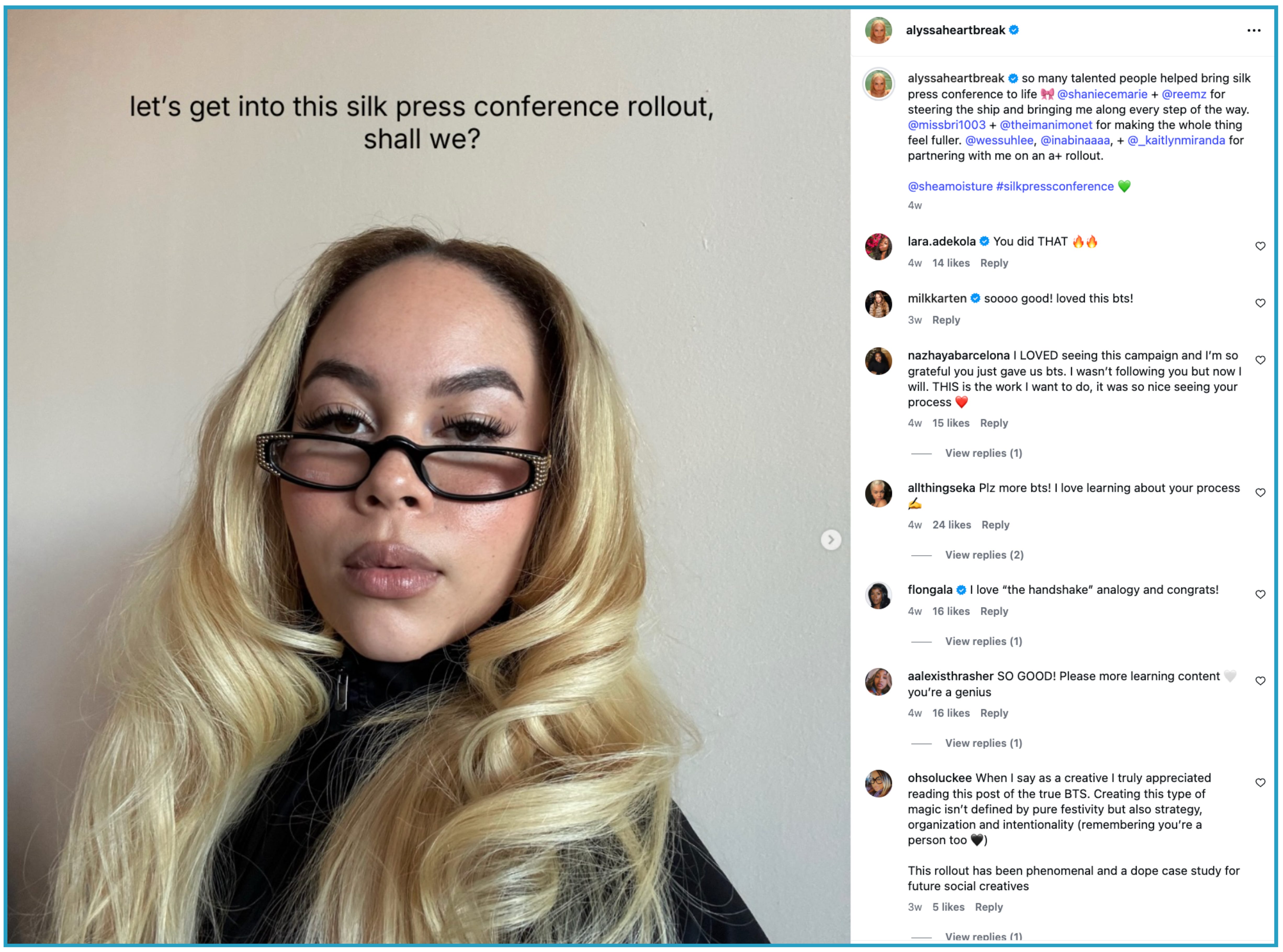
I talk to Alyssa Ackerman, Social Lead at SheaMoisture, about generating over 3M views on the brand's Silk Press Conference campaign.

Good morning! On Tuesday I released Link in Bio’s Brand Social Trend Report: Q1 2026. One reader commented, “Finally treated myself to a paid subscription and this was worth every discontinued penny!! Genuinely got so much out of this - took a page of notes - and leaving with some very actionable takeaways.” That is the goal!
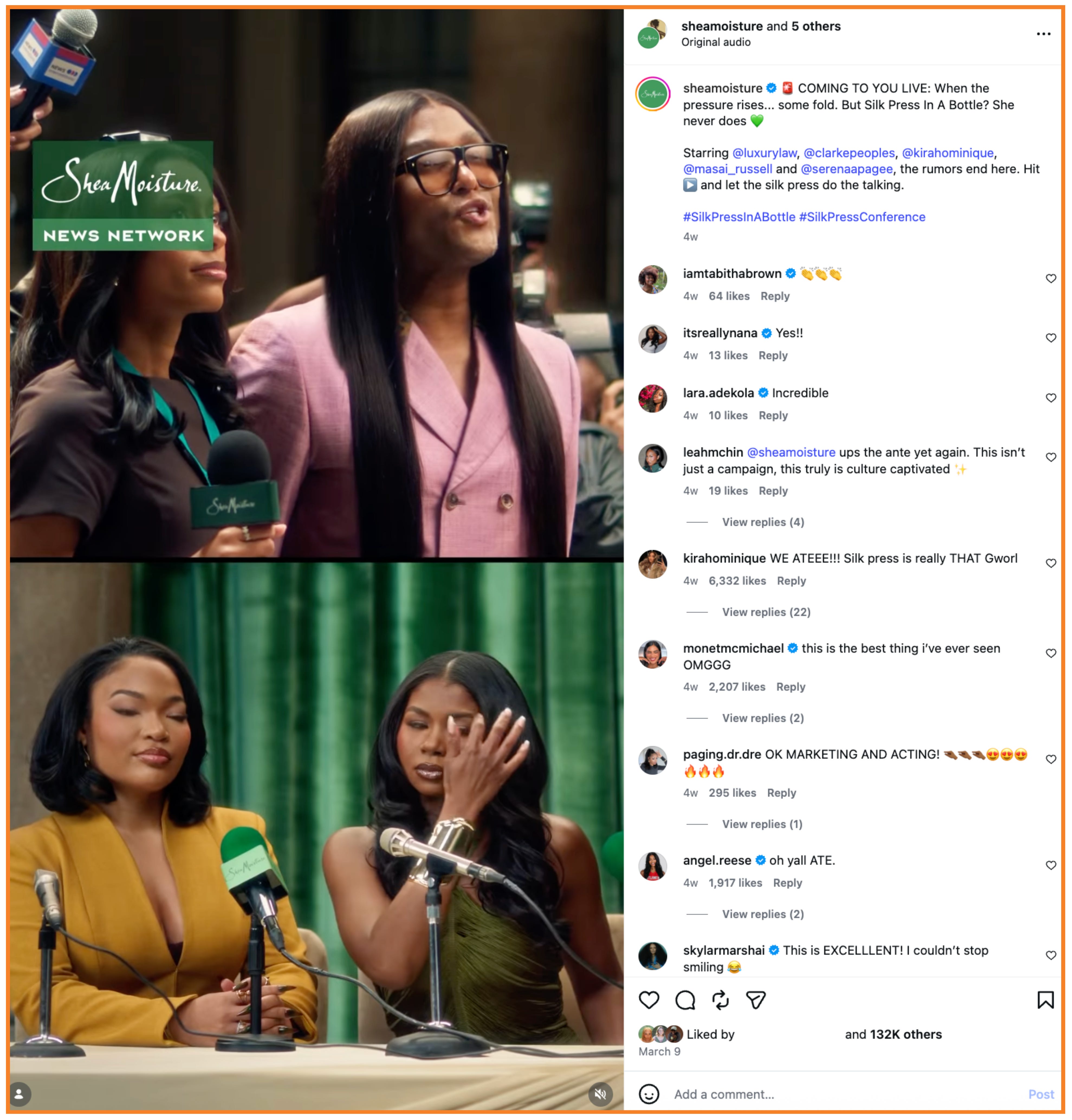
The end of the report focuses on how brands are refocusing on resonance. Ditching quick trends and creating posts that actually stick. While I was writing that section, I thought about the campaigns from the last three months that still felt top of mind to me. One I kept coming back to was SheaMoisture’s Silk Press Conference, where stylist Law Roach interrupts a “silk press conference” between Clarke Peoples, Kirah Ominique, Masai Russell, and Serena Page. It’s clever, entertaining, and somehow still heroes the brand’s new product. As one commenter put it, “I just love that we’re making marketing fun again 😍 ATE!” The campaign has over 3M views across platforms.
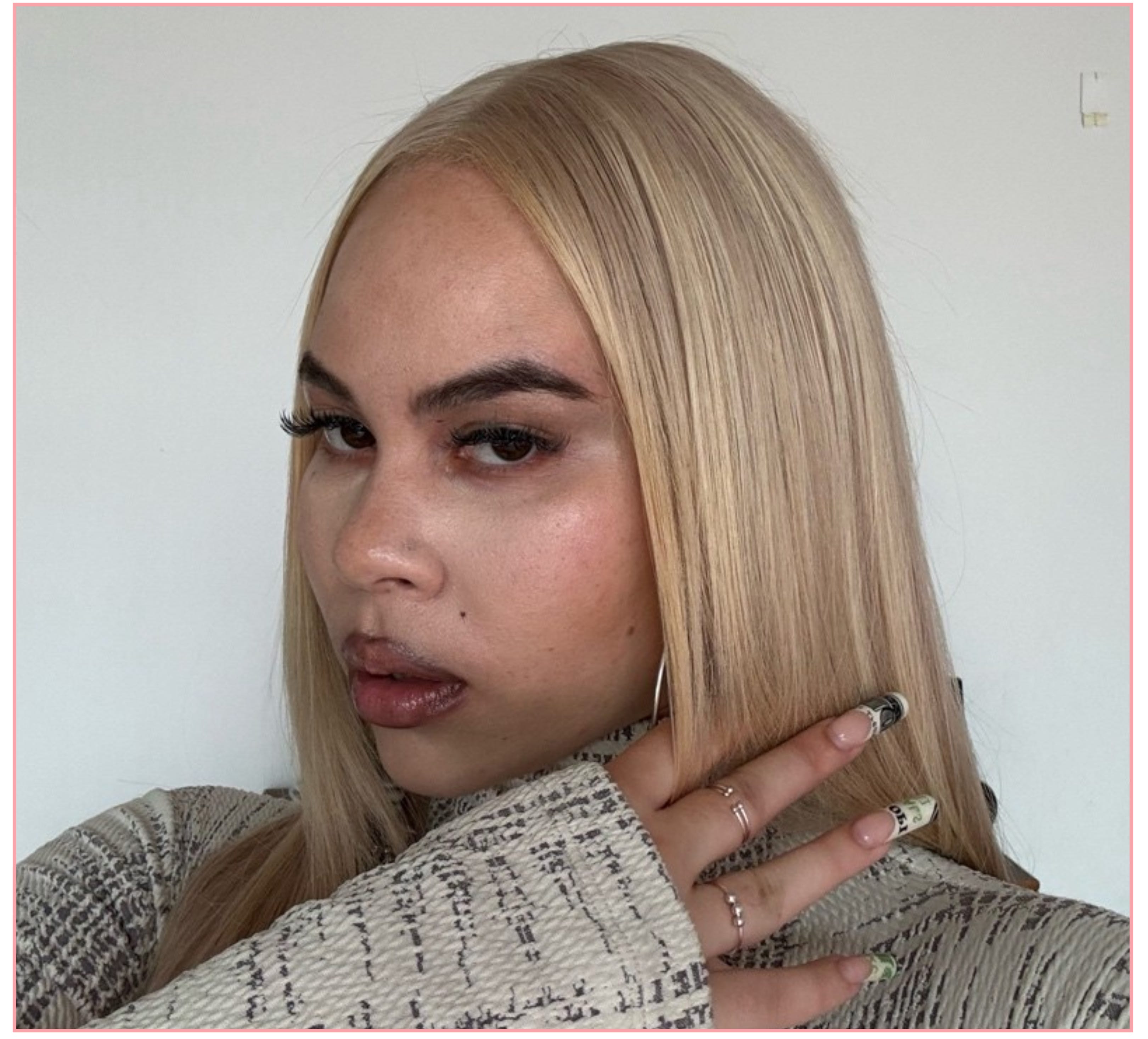
For today’s newsletter, I spoke with Alyssa Ackerman, Social Lead at SheaMoisture, to understand how the campaign came together. (It was born out of a sticky note brainstorm!) Alyssa is also the Creative Editorial Director at CultureCon and The Creative Collective NYC, where she oversees all creative and editorial output across social, email, website, and experiential. She previously worked at or consulted for Topicals, Hypebeast, Parkwood Entertainment, Refinery29, BREAD, Farmacy Beauty, and more.
A big part of why SheaMoisture’s campaign resonated is because it made their audience feel seen. As Alyssa tells me below, “I never try to make content go viral…I’m trying to make content that makes someone feel seen—and if it goes viral, that’s because we got the first part right.” I talk to Alyssa about her favorite tools for content planning, the role instinct plays in her strategy, and why social should be there to build the foundation of a campaign and not be “handed the keys after the house was already built”.
Rachel Karten: If you had to sum up your social media philosophy, what would it be?
Alyssa Ackerman: The best social doesn’t follow culture, it understands it well enough to move with it.
That distinction matters more than people realize. Anyone can hop on a trend. And any brand with a big enough budget can hire an agency to reverse-engineer what’s working and produce a version of it two days later (sometimes hours, if they’re really good 😉) . What I care about—and what I’ve built my unique sauce around—is something harder to replicate: it’s the kind of cultural fluency that lets a brand show up in a way that feels native, not performed.
That fluency starts with listening. Like, really listening—not just to what your audience is saying about your brand, but how they’re talking to each other, what they’re celebrating, what they’re tired of, and what kind of content makes them feel like someone finally gets it. When you build from that place, social stops being a distribution channel and starts being a relationship. And relationships, over time, become the thing that no algorithm update or competitor budget can take from you. You own the #1 spot on their story lists. You’re the pinned conversation in their DMs. You’re the one they want to hear from, not the one they quietly mute.
I never try to make content go viral (anyone who still says this should remove from their vocabulary stat). I’m trying to make content that makes someone feel seen—and if it goes viral, that’s because we got the first part right.
Rachel: About a year ago you wiped SheaMoisture’s feed and started fresh. What were some of the big changes you made to how the brand shows up online?
Alyssa: Shea is a special brand to be a part of. There’s so much heritage there to respect. But years of history also comes with the weight of old habits—and the very real need to capture the hearts of a new generation who’d rather reach for the trendy new haircare line from their favorite influencer or celebrity.
I came in as a strategist tasked with building their new annual playbook. A brand refresh was already underway, and a strong social perspective was needed to help tell that story in a way that honored the brand’s legacy while signaling to new audiences who the OG in Black beauty really is—one of my favorite phrases I coined for them. After playbook was done, I was invited to join the team full-time.
Some of the biggest changes I made centered on visual content first. Our creative director, ShaNiece Pyles and her team had captured hair, versatility, and expression so beautifully—I knew I wanted that work to live across every format, every piece of real estate I owned. It was bold, fresh, and an undeniable representation of Black girlhood.
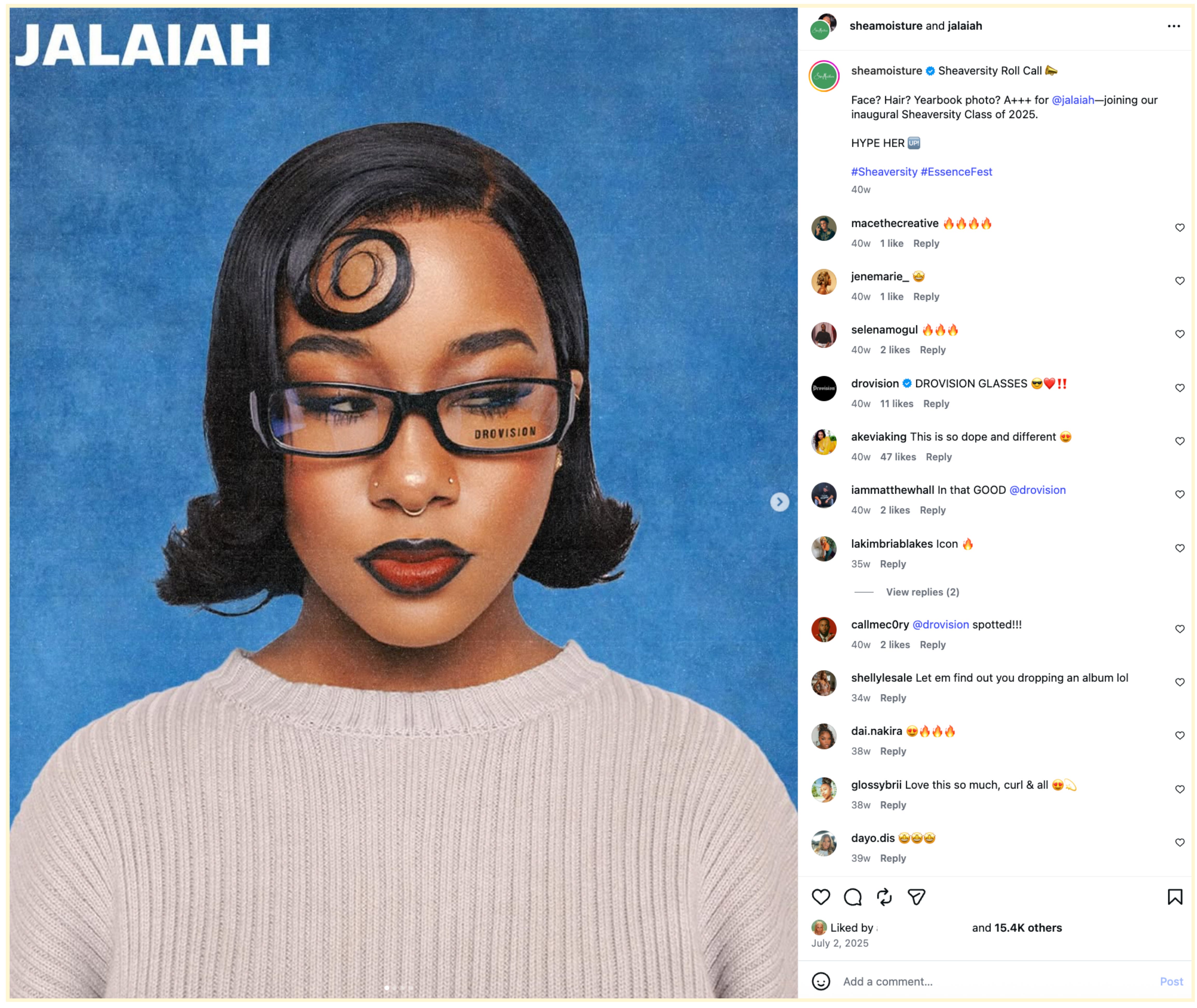
Beyond visuals, I knew how important it was for our audience to not only see herself, but to hear herself. Shea had long been associated with the aunties—and honestly, to some, it probably still is, and rightfully so. But in this new era, I wanted us to claim authority and cultural relevance. Not through gen-z speak or borrowed slang, but in the ways she and we actually talk: playful, casual, and 100% ownable.
I also had the pleasure of collaborating with my Topicals-alumni, Imani Moss, on influencer and social crossovers—one of my many favorite places to play. She had the it-girls that worked for Shea’s new direction, I had the vision for how it would live on social, and together we created some of the brand’s best social-owned moments. That kind of cross-collaboration is what I believe helped put Shea back on the map in a genuinely remarkable way.
Rachel: I want to zoom into your recent Silk Press Conference campaign. You’ve shared that it was born out of a “dream like you have no budget cap” sticky note brainstorm. Do you remember what was written on that sticky note?
Alyssa: Honestly? Not even a little. There were hundreds of sticky notes by the end of that eight-hour day.
What I can tell you is that the session itself was magic—and that’s largely a credit to our Head of Marketing, Reema Amin. I’ve sat on a lot of marketing and creative teams over the years, and I tell her often: this is my first experience working with a marketing lead who truly gets social. Not “social-first” as a buzzword, but someone who genuinely sees eye to eye with me and understands that leading with this mindset creates immediate, measurable impact—for growth, for the business, for every cross-functional team it touches.
Our full internal brand team was in that room. We had to dream without limits, but we also had a product to launch: our newest innovation, Silk Press In A Bottle. So the dreams had to mean something.
We threw out our wildest ideas. I originally pitched Katt Williams as our Silk Press King—and the team instantly ate it up. It didn’t work out, but we landed Law Roach, who turned out to be an even better fit. And as a Chicago girl, the fact that we share the same roots made me feel giddy inside.
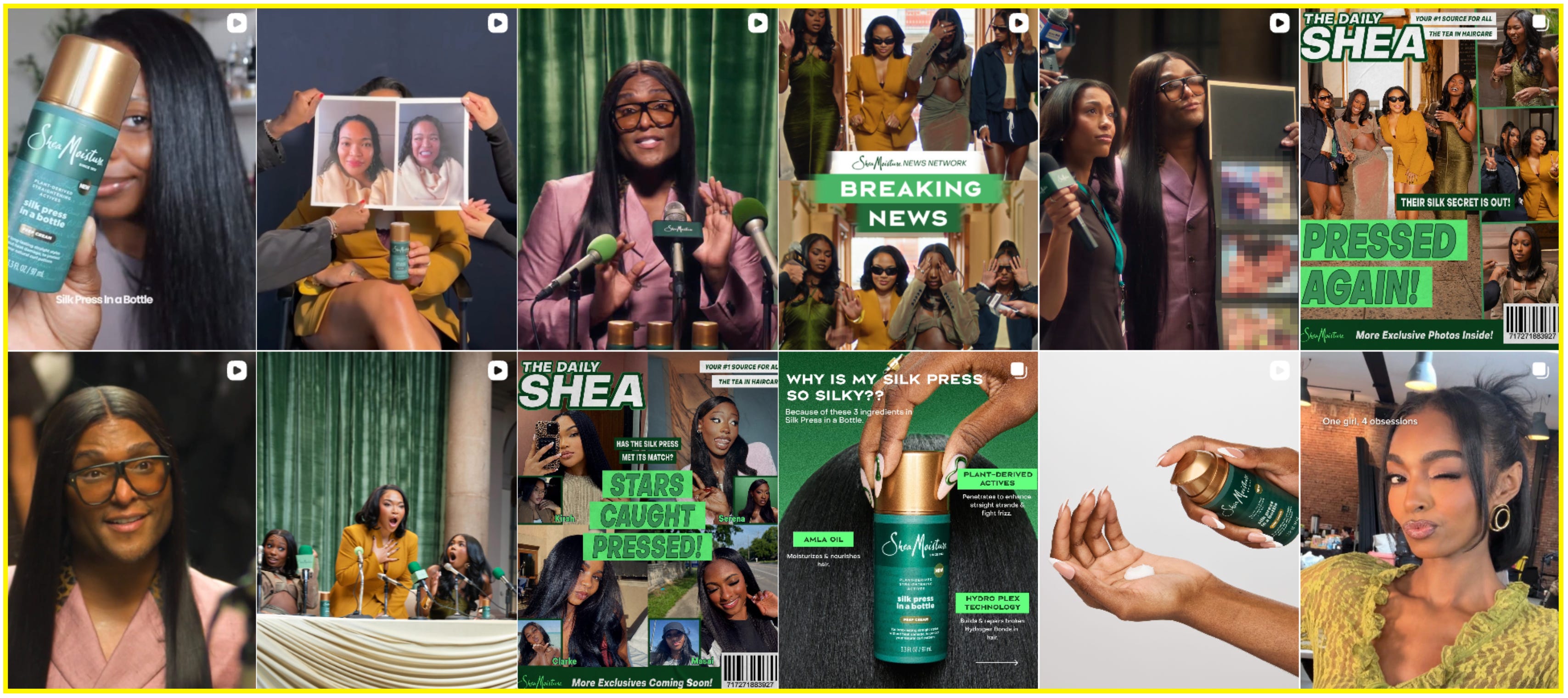
Casting from Reema and our influencer team was impeccable, but it wasn’t the only spark. What made Silk Press Conference actually work was every person in that room and our external partners deciding to protect the idea all the way through—from a sticky note on a wall to the brand’s most engaging campaign to date. That’ll never get old for me.
Rachel: How do you know when a campaign idea has it? I know it can just be a feeling, but I am curious if you’re able to put it into words.
Alyssa: It’s actually pretty difficult to put into words, so I appreciate you calling that upfront.
I’m lucky enough to work in spaces where I’m part of the target audience. Which means my friends and peers are too. That proximity is a kind of leverage most people underestimate. Because of it, knowing whether something has it is less of an analysis and more of a light switching on (or off) in my brain. A feeling in my gut that I’ve learned to trust deeply. I lead with intuition more often than not, and I don’t take that inner knowing lightly.
That instinct, paired with the ability to simply vibe test an idea with people who reflect the audience, is how I know. If I don’t have an immediate reaction, it’s more than likely a no for me. I’m not someone whose enthusiasm can be easily manufactured or sold—I can tell pretty quickly whether something has it or not.
That said, I’ll admit I’m not always right. And I genuinely love being proven wrong, because there’s real growth in that.
Rachel: I’ve covered a lot of big campaigns. I can almost immediately tell when social was involved from the beginning. Why do you think it’s important for social teams to be brought in at the outset of a campaign?
Alyssa: I say this often: in today’s marketing landscape, social is the nucleus. It’s also the connective tissue between creative and brand—one of the only teams that gets to see the full arc of a campaign from both sides and pick up workstreams from each.
Traditionally, brands would spend hundreds of thousands—sometimes millions—on a single ad spot with a single asset. Once it was live, you stepped back and waited for a signal from your CMO the next morning. That model is over, or at least it should be. Social is your opportunity to directly connect with your audience in real time: to address pain points, build genuine relationship, and—my favorite part—tell a story that keeps unfolding long after launch day.
When social is brought in early, you gain three things: invaluable cultural perspective that can shape the campaign before it’s too late to change course, a strategic throughline that ensures every asset has a life beyond the hero moment, and more content than you’d ever get from a single shoot day. The difference between a campaign that lands and one that fades is usually whether social helped build the foundation—or was handed the keys after the house was already built.
Rachel: Do you have any tools you use to help prepare for a campaign shoot?
Alyssa: My boss at Topicals once coined the term “left brain creative”—and that’s me to the T. Though I’ll admit, some mornings I wake up more right-brained than others.
Tools are my secret weapon. And I think they’re a big part of what makes me more than just a social girl. I see things 360 and I act on them 360. I consider all angles, evaluate risk, and ask myself the simple question: is this cool, or is it not? But then from there, I build. An idea becomes a plan, a plan becomes a brief, and a brief becomes execution—whether by me or my team.
My go-tos: Airtable for daily planning and project management, Pitch or Google Slides for presentations, Notion for team knowledge bases, and Canva or Figma for collaborative creative direction. Each one serves a different part of my brain, and together they keep the work organized without killing the instinct.
Rachel: A lot of big brand campaigns flop on social. If you had to diagnose an overall theme for why, what would it be?
Alyssa: They’re still working from old approaches to marketing, resulting in them not trusting the people closest to the audience to inform them on how to show up.
Social teams at large companies are often the youngest, most culturally plugged-in people in the building. They know the audience. They live in the same feeds, use the same platforms, speak the same language. And yet they’re frequently the last ones invited into the room (if they’re invited at all). That disconnect between where the decisions are made and where the culture actually lives is, in my experience, the root of most campaign misfires.
Rachel: Do you have any advice for advocating for yourself when you work in social media?
Alyssa: When you work in social for a company that wants to actually succeed on social, your job is to be present in as many rooms, and on as many projects as your strategy can support. If you see a campaign in the works and you have no seat at the table, knock on the door. And when it opens, come prepared with a point worth fighting for.
The honest truth is that some people simply don’t consider social when a campaign is being built. And some people don’t take it seriously enough to seek out the person who does. That’s not an excuse to fall back, let that be your motivation. Come with the data, the precedent, the case for why your presence changes the outcome. Make social impossible to overlook.
My favorite way to frame it: would you rather have my input now or would you rather watch the asset tank later? Bold, I know, but you can soften the delivery without losing the point. Either way, the truth remains.
Rachel: I’d love to do a few rapid fire questions to end! If you could only post on one platform for the next year, which would you choose?
Alyssa: TikTok - one repeatable content series that never changes. You know the brand for that kind of content, that’s it.
Rachel: What’s one thing you wish more CMOs understood about social media?
Alyssa: It’s never as simple as you think, and reducing tasks to simplicity is undermining someone’s skillset.
Rachel: Biggest brand social pet peeve?
Alyssa: Corny community engagement comments.
Rachel: Best social media tip you’ve ever received?
Alyssa: Stop trying so hard.
Rachel: One thing you love about working in social media
Alyssa: The ability to flex my creative, entrepreneurial, and marketing muscles all at once.
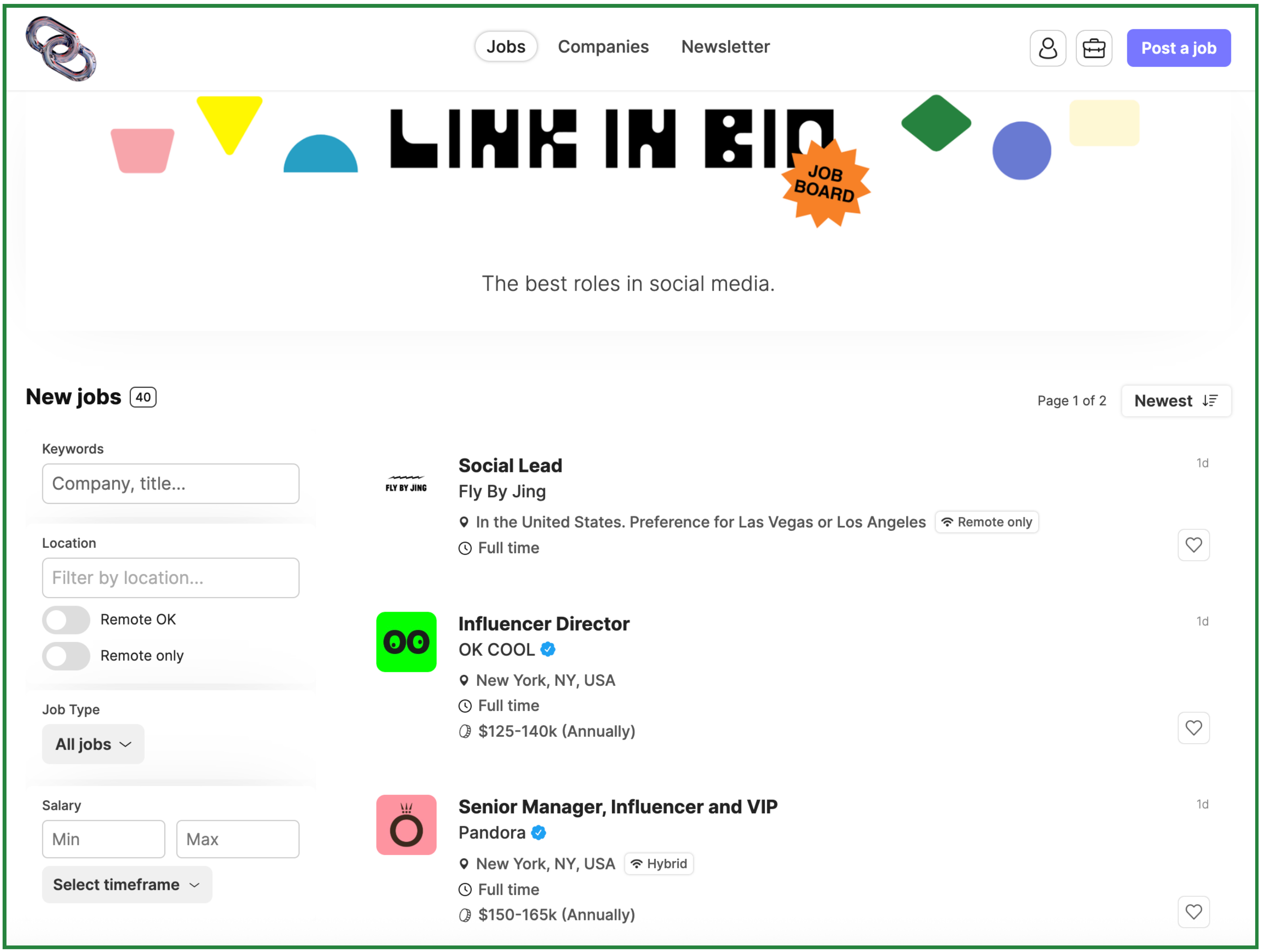
Before you go, Check out the Link in Bio Job Board! There are new roles from Fly By Jing, Anthropic, PBS, and more.
Finally, if you enjoy free interviews like this one, you can upgrade to a paid Link in Bio subscription. You’ll get weekly strategy newsletters and quarterly trend reports, along with access to the Discord community.
If you’re already a paid subscriber, thank you for making this newsletter possible!
One of my favorite interviews to date!
Louder for the people in the back: "It’s never as simple as you think, and reducing tasks to simplicity is undermining someone’s skillset."