

How music marketing works
Kalesha Madlani has spent the past eight years helping musicians show up online.

A few weeks ago, musician Eliza McLamb wrote a Substack essay titled Fake Fans. It details the work of Chaotic Good Projects, a digital agency that utilizes user-generated content campaigns and fan pages to market music artists. She zeroes in on how the algorithm has changed the dynamics of attention. “So, in this new landscape, is creating hundreds of fake accounts just par for the course of being a good publicist?” The essay bubbled up on Twitter for a few days.
On Tuesday, WIRED published an article digging into how Chaotic Good Projects worked with the band Geese. The headline? The Fanfare Around the Band Geese Actually Was a Psyop. Psyop! They wrote, “Essentially, the firm creates networks of social media pages (typically on TikTok) and uses them to drive the band’s music into the recommendation algorithm.” The Twitter conversation immediately picked back up.
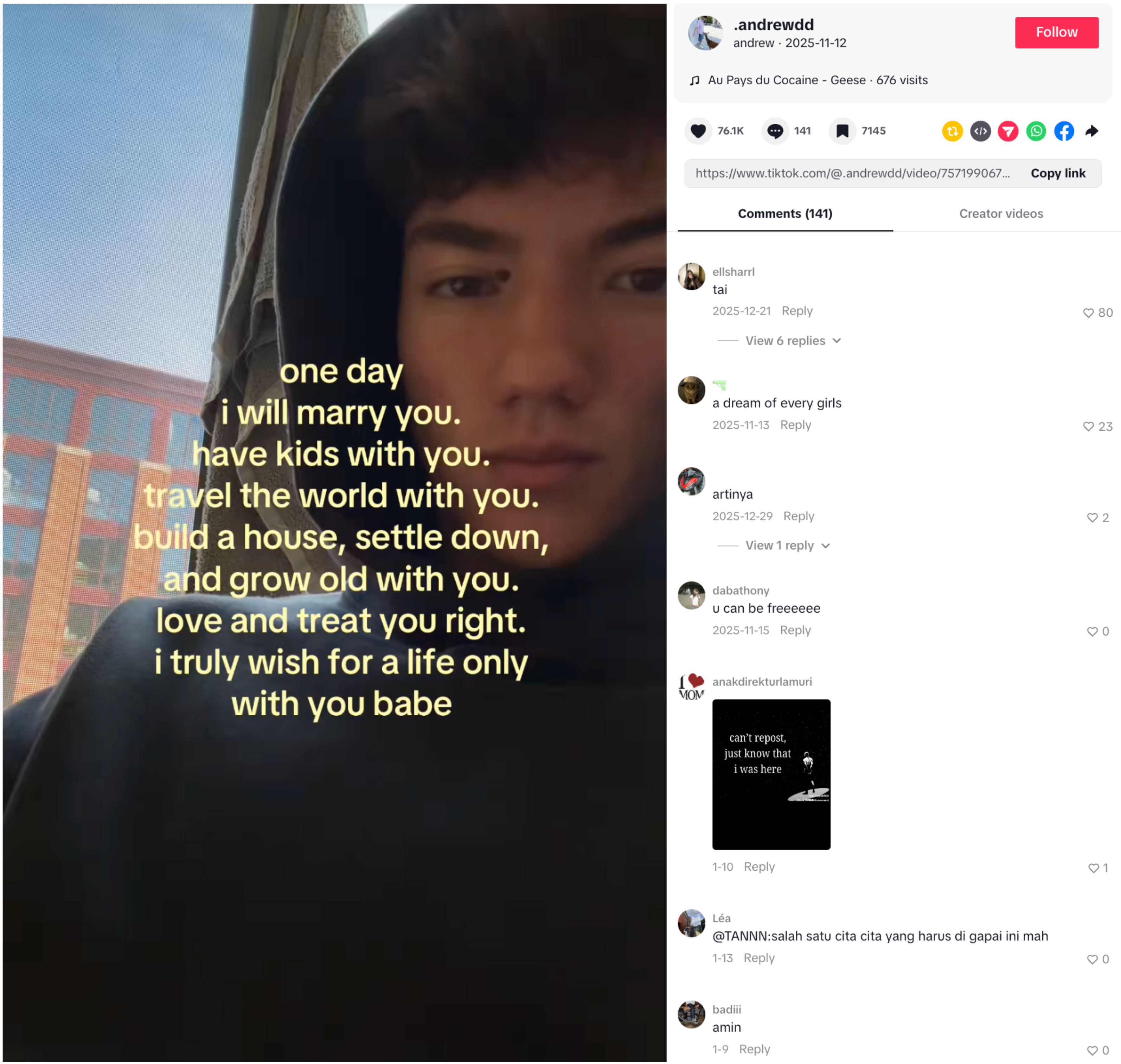
It’s not often that marketing discourse makes my head spin. Here’s a peek inside my brain on Tuesday:
This is just how marketing works. Get used to it.
But if they are paying people to post a song. Shouldn’t it be disclosed as an ad?
I wonder if my favorite SpongeBob Squarepants edit to Geese was part of the campaign…
It doesn’t matter that this is “just how marketing works”. How fans and consumers perceive marketing is just as important as the marketing itself.
Is it ethical?
Wait, the FTC told Billboard that accounts don’t need disclose if they are paid to use a song.
Maybe it’s just that this specific tactic doesn’t match the “brand” of Geese.
The best marketing doesn’t feel like marketing but when does it go too far?
I should log off.
For today’s newsletter, I wanted to talk to someone who works in music marketing. Kalesha Madlani has held roles at places like Sony Music, Epic Records, Interscope Records, and now works in marketing at SoundCloud. She’s worked with artists like Lana Del Rey and Zara Larsson. Below we talk about her time running @1DUpdatesOnline, what she thinks of the term “industry plant”, and why she hopes more teams lean into direct-to-fan marketing.
Rachel Karten: First, can you tell me a little bit about your background in marketing and music?
Kalesha Madlani: I got my start in music by running one of the biggest fan pages in history (I was eclipsed by the Blinks when Blackpink came around). I ran @1DUpdatesOnline, and had nearly a million followers at 17 years old. I leveraged the fan account to live tweet on behalf of the band at events and award shows, which ultimately lead to my first internship at Sony Music. I’ve advocated for fans and fandom long before ‘superfan’ was a buzzword, back when the industry still thought it was uncool, and everything I do in music leads back to my ‘why’—I do it all for the fans!
I’ve spent most of my career in between music and tech, working frontline at major record labels and at music-tech companies leading partnerships.
At Epic Records, I supported releases across the entire roster—Travis Scott, 21 Savage, Meghan Trainor, Zara Larsson, Mimi Webb, to name a few. At Interscope Records I led digital strategy for Lana Del Rey, Jon Batiste, Willow, Ellie Goulding, Gwen Stefani, and more.
Following my time at record labels, I launched my own creative advisory.
Now, at SoundCloud, I work closely with our internal team and joint-venture partners to identify artists before labels catch wind of them, and offer them white glove artist services—marketing, digital, creative, project management, release strategy, commercial strategy, etc—to prepare them for the next step in their career. It’s a great opportunity to be a part of an artists early journey and help them out so they don’t go into these label meetings blind. Most artists have no idea what they can expect from a label or manager and by offering them white glove artist services, we can provide them with a launchpad for success.
Rachel: I have to start with Geese-gate. What was your reaction to the reaction?
Kalesha: I laughed, honestly. Clipping is such an old strategy. It’s not even innovative anymore. And Geese of all artists! I think most people have no idea how the music business works and they would have a stroke if they really knew what goes into making an artist pop nowadays.
Rachel: What other social media marketing tactics are popular in music that you think might surprise fans?
Kalesha: So many! Most “fan pages”, especially for newer artists, are team led. You can confirm an artists fan pages are team lead a few different ways:
Number of fan pages and viral TikToks do not match up to number of tickets sold
Fans at concerts only know the TikTok snippet of a song
Fan page doesn’t have “standard” fan behavior (no photos of the fan, no emotional language, no “fan account” mention in the bio—this is necessary to avoid copyright issues, but if its team led, they’re already whitelisting the account—the account always has information early, etc.
Rachel: Can you manufacture fandom for an artist or band?
Kalesha: The best thing to keep in mind is very rarely is anything on the internet an accident. Everything is planned and nothing is real. While you can manufacture awareness with a hefty budget, you can’t manufacture fandom. That’s an experience that requires years of work and buy in from every angle—artist, manager, label, agent, and, of course, the fans. While you can manufacture the idea of fandom through virality, smoke and mirrors, I do believe we’re going to witness a pendulum shift very soon. People are getting fatigued and marketers need to switch things up.
As a future thinking marketer, some of my focuses moving forward are: direct-to-fan marketing, events and experiential, creative OOH, intentional livestreams, and creating safety and meaning for the community. I’ve coined the term “the meaning economy”, which I outline in my advisory white paper here.
Rachel: What do you think people mean when they accuse someone of being an “industry plant”?
Kalesha: There’s really no such thing. This industry moves off of relationships, it’s all about who knows you. Most people who use the term “industry plant” have no clue what they’re talking about. Most “industry plants” have 5-10 years of hard work under their belt. Blood, sweat, tears, and a lot of money go into making a star.
Rachel: You’ve worked in this industry for a long time. These interest-based algorithms seem like a real shift in how both artists and bands post. What are some of the ways music marketing has changed due to that?
Kalesha: Before, artists would get signed to record labels and were promoted via relationships the labels had with cultural accounts—TV, press, film, media, etc. Nowadays, so many of those institutions no longer exist or no longer move the needle. The tech companies have more power than the media platforms do, which is why you only see marquee artists getting support from Meta, TikTok, Snap, etc. It’s impossible to service everyone, so you have to pick and choose.
The old model of A&R has also changed how artists are signed and marketed. Before, a kid nobody knew would get signed and labels would market the hell out of them until they became a star. Nowadays, nearly every label owns some distribution company that provides them with data. For example, when a major label purchases a distributor, the data from all of the developing artists uploading their music to these free or cheap distributors is given to the major labels. The labels have certain algorithms that trigger alerts whenever an artist reaches a certain threshold, using whatever data they see fit (streams, followers, impressions, etc), and once the trigger hits, the A&R process begins. You have to have motion now in order to get signed or even considered.
Rachel: Are there any bands or artists that you think are doing a great job of showing up on social media right now?
Kalesha: So many, and it’s a spectrum. On the independent side, I love Liim—a Harlem based alt/hip hop artist. He uses social media in such an authentic, genuine way and has leveraged the “finsta” trend to generate hype around him and his music. He’s been cosigned by Tyler The Creator, ASAP Rocky, Joey Bada$$ and more. He’s up next for sure.
On the other side of the spectrum, you have groups like Katseye who have an ultra manufactured machine around their marketing—the girls have a dedicated content team that goes everywhere with them. Before rehearsals even begin, they spend at least an hour shooting TikToks. Before shows, all the girls get content for both the Katseye page and their personal pages. As industry darlings, they also get tons of support from the platforms—Meta, TikTok, etc.
At the end of the day, it’s less about the artist and more about the team behind them. There’s so much turnover in music marketing—with layoffs and never ending poaching, people are hopping around and not taking their roster with them. So one day an artist will be on top and the next day they’ll be silent because their content / digital / marketing / seeding person left, or the label ran out of budget to pay the secret nerdy teams that are boosting everyone online.
There should be awards for the best digital marketers, they don’t get enough recognition for the work they do.
On the artist side, I’d love to see more long term focus on content and social. More artist teams need to build out internal agencies. Due to lack of resources and headcount, it seems like artists only get invested in when they’re having a moment (see Zara Larsson for example). The talent has always been there but the digital budget was unlocked only after she had her viral meme.
Rachel: What do you love about working in music marketing?
Kalesha: I genuinely love telling stories and creating fun experiences for fans. The more depth an artist has, the better story I can tell. I come from a superfan background, so this is my way of paying it forward.
What I’m scrolling
The New York Public Library posted a Dic Pic. Short for Charles Dickens’s The Pickwick Papers, of course. In Link in Bio’s recent trend report, Paulina Mangubat shared that our feeds would get more ribald…but with purpose. This is a good example of that. So is NYGov’s “hole filling season” post that has 74K likes.
This video from a new bandage company has 601K views and 48K likes. So much of a social launch strategy is spent overthinking photoshoots and grids, when videos like this are what actually move the needle.
Is the best part about Instagram Edits the analytics? Samantha Yehle called out on LinkedIn that the editing tool now lists engagement metrics in order of importance to reach.
I love Peloton’s ad with Hudson Williams. It’s directed by Bethany Vargas, who also directed Gap’s Katseye ad and Young Miko ad.
A.I. has a message problem of its own making. Great read from Kyle Chayka in The New Yorker. “A more effective strategy might be for A.I. executives to stop appointing themselves as the only arbiters of safety, to stop asking for blind faith, and to start fostering a system of external accountability, with input and involvement from the public.”
Every account right now is asking their followers to vote for them in The Webby’s, but this creator did it best. Friend of the newsletter Max Zavidow filmed his mom handing out flyers in a park and asking people to vote. It’s wholesome and also clearly gets his message across. A good lesson in making a big audience ask entertaining.
Carvel made one person’s day and got 2.1M views. It was in response to this viral video. Too many brands would look at the original viral video, see the user has under 10K followers, leave a comment, and move on. Instead, brands should be looking at the velocity of a story—no matter the follower count of who posted!—and if there’s a way to supercharge it.
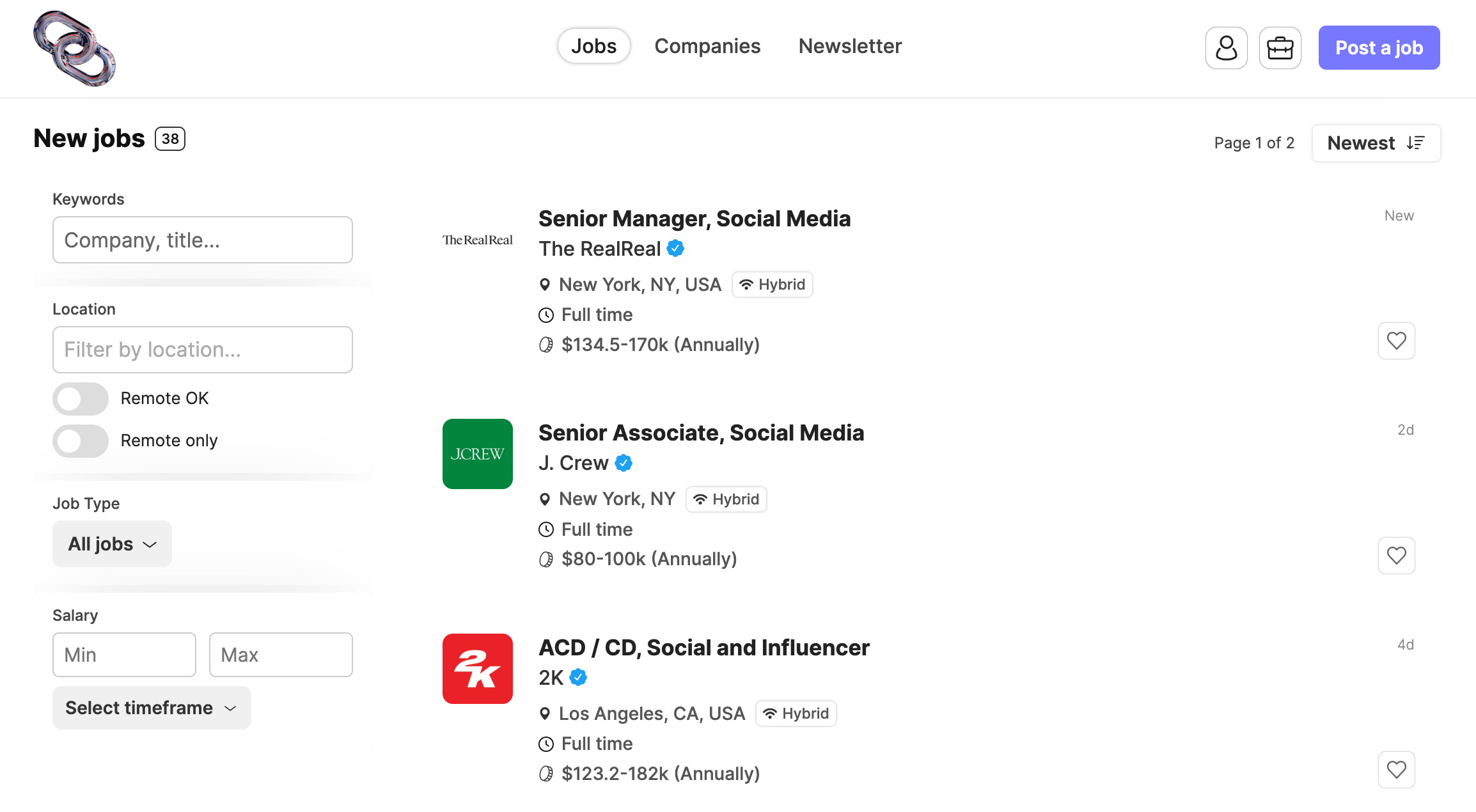
Before you go, check out the Link in Bio Job Board! There are new roles from The RealReal, J.Crew, JPMorganChase, and more.
Finally, if you enjoy free interviews like this one, you can upgrade to a paid Link in Bio subscription. You’ll get weekly strategy newsletters and quarterly trend reports, along with access to the Discord community.
If you’re already a paid subscriber, thank you for making this newsletter possible!
I really like this quote “very rarely is anything on the internet an accident”. Lately, I have been seeing a rising artist “Stella Lefty” showing up on my social media feeds. She has a line in her music she promotes consitently and its really catchy. I listened to the song and she made it the first line of her song, even though it clearly is meant for the middle of the song. But it makes sense: the listener is there because they heard that catchy line on social media, and it grabs the listener’s attention immediately. Some may say she “finally got seen and is now getting popular,” but this is likely very strategic (and smart) and is certainly not an accident.
Loved being part of this. Thank you Rachel!