

How Figma makes designers feel seen
I talked to Yosub Kim, Director of Brand Marketing at Figma, about the brand's playful approach to social media.

Some of my favorite brand social media accounts follow a simple formula. They take universal truths about their core audience and find clever ways to translate them into product messaging. Figma is an excellent example of this. If I had to summarize their online presence in one sentence, I’d go with something like “A celebration of design.” That’s very different from, say, “Information about a collaborative interface design application.” Figma, first and foremost, makes designers feel seen.
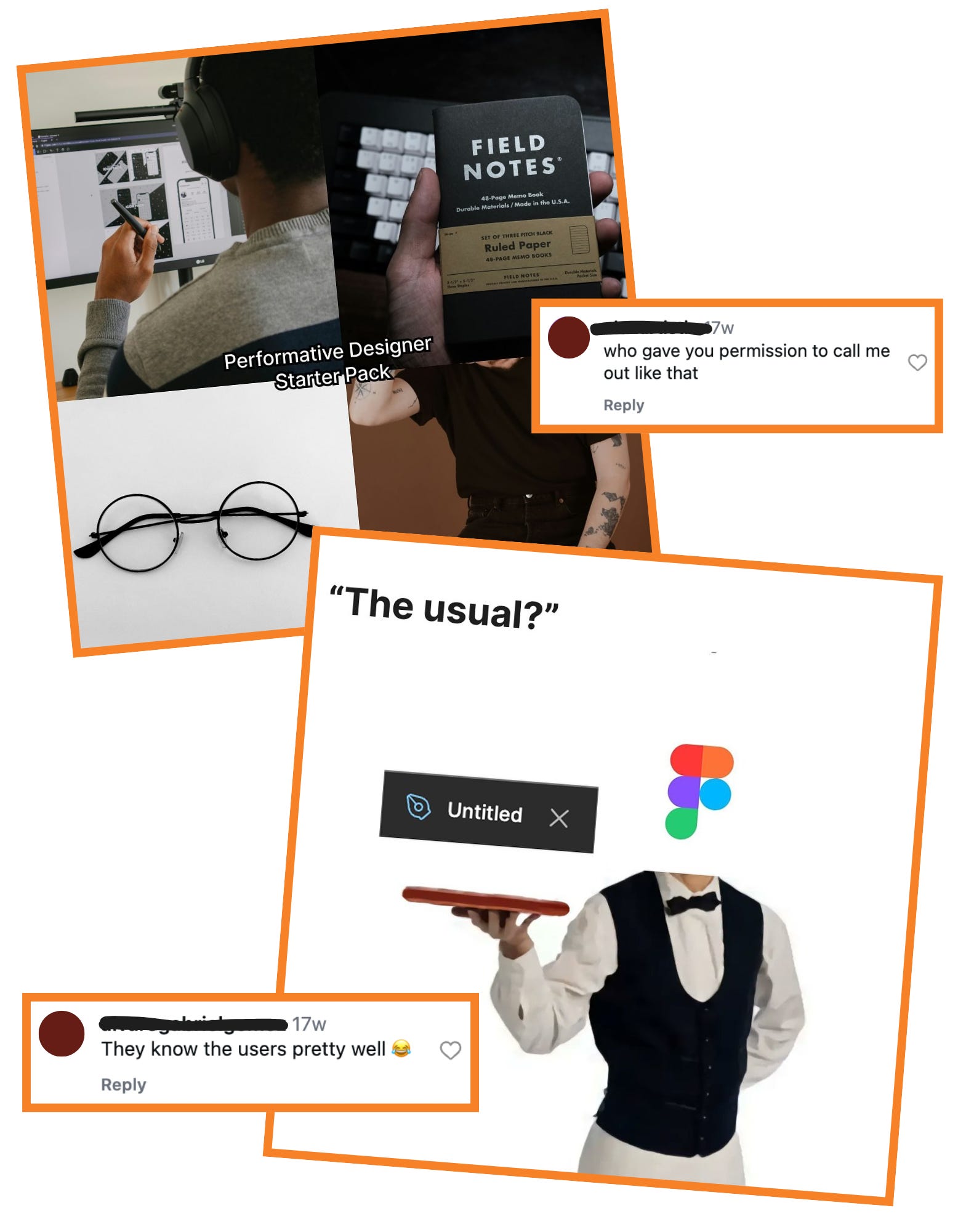
Importantly, the account is entertaining to Figma users and non-Figma users alike. They turn their product into a vessel for cultural commentary and relatability. Maybe that’s making a joke about “nudging” that all designers can laugh at or showing off a feature by referencing a Love Island sound that’s trending. In an algorithmic environment where non-follower engagement matters as much as follower engagement, that’s key.
For today’s newsletter, I talked to Yosub Kim, Director of Brand Marketing at Figma. He has worked in social media for over 15 years and has led social strategy at places like Twitter and Giphy. He has a deep understanding of how to make product updates FUN. We talk about image-only posts on LinkedIn, balancing technical with story (plus some thoughts on the “storyteller” discourse), and why he’s bullish on “handmade” creative in 2026.
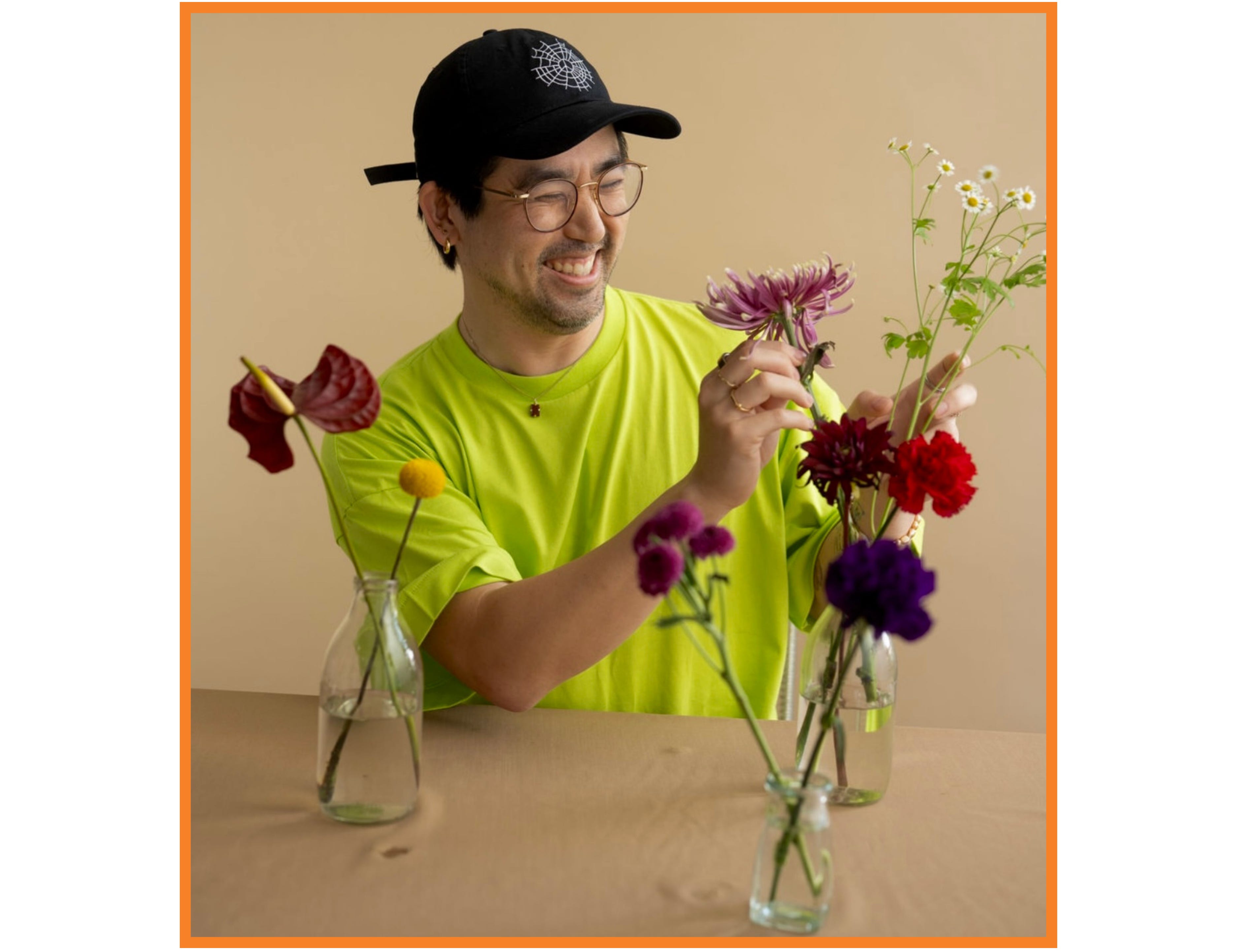
Rachel Karten: How would you describe Figma’s approach to social media?
Yosub Kim: There’s a lot of experimentation and play, we’re always asking, “How do we surprise our audience today?” Ideas are constantly thrown around in our DMs and Slack channels, even if we don’t end up using them. We’re given a lot of freedom, lots of chances to be bold. A chronically online writers room, if you will.
RK: You recently got promoted from Head of Social to Director of Brand Marketing. Can you talk to me about that switch and what areas you oversee?
YK: I’m sure many or all in our field would agree that there’s a lot of overlap with Social and Brand Marketing. Even when I started, it was clear the larger team and CEO, Dylan, believe that our social channels are a key part of Brand Marketing. Our team and our work touch so many parts of the business.
My boss, Nairi, who is the Chief Communications Officer, has always been such a huge advocate for Social and Brand Marketing to be synonymous and pushed for me to take the Brand Marketing role after Claire, my previous manager and Figma’s first marketer, left the company. We still maintain that our team is “social-first” because, from my perspective, that’s how the best campaigns come to life. Turning online conversations into something that manifests in the physical world and doing it all over again. The short answer to this question is: People who work in social are multi-hyphenates! We can do it all.
RK: What does your team look like?
YK: So, our team—growing but currently a team of four with me, a Strategist, Creative Technologist, Video Creative—manages all the social channels across X/Twitter, LinkedIn, Instagram, Threads, TikTok, and YouTube. We also oversee OOH, video, creators, supporting exec and employee social comms, social insights, mostly every product and feature launch. The same day never happens twice at Figma, which is perfect for my ADHD.
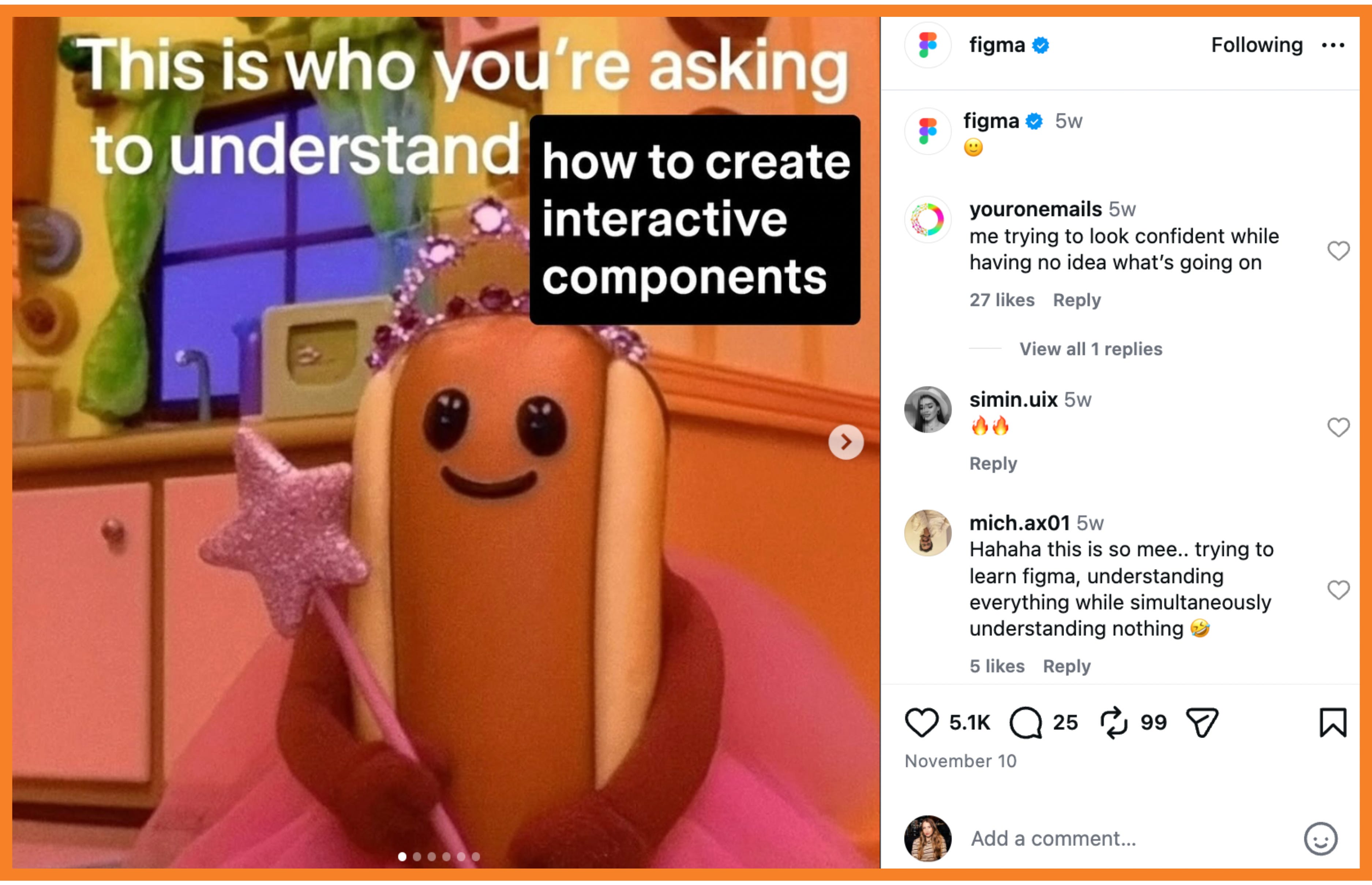
RK: When I think about Figma’s social media strategy, I think about how you infuse humor into product. Whether it’s using memes to show off capabilities or putting a “should I text my ex?” joke into a feature announcement. I’m curious to hear how you creatively approach posts that feature UI or product screenshots?
YK: This started from my time at Twitter. I was in charge of product launches for @Twitter which led to managing Twitter Spaces, Communities, Twitter Circle, and Fleets. I was always trying to find ways to talk about the product or feature that wasn’t just about the benefits. That content is helpful but you have to think beyond—how you can tie those updates to culture while still rooting it in something real. That’s usually a mix of me, our Strategist Amy, and a PMM riffing on a call, talking through the use cases, how technical do we get, or how simple we make it.
Figmates (Figma employees) are some of the most social-savvy people I know, so I’ll try to bring in different teams who worked on the product or people we usually collaborate with to talk through and brainstorm. We talk a lot about our favorite memes and trends and see how we can apply it to our announcements. Sometimes it works, sometimes it doesn’t…and that’s the fun of it.
RK: Another big piece of Figma’s social is highlighting employees in really fun-to-watch ways. Like bringing back the “sign an old photo of yourself” format for IPO day (3.8M views!) or highlighting “designer and marketer pet peeves”. What advice would you give to social teams that are struggling to find engaging ways to feature team members?
YK: I say don’t force it or really lean into the fact that your teams don’t want to be on social. I’ve been seeing so much content that’s poking fun at how teams are scared to be in social videos. You can find other ways in. There are a plethora of “hacks” you can also try with existing content. Videos like “gen z edits” or voice dubbing over content if they’re a little more shy to speak on camera. I also really have been appreciating the “games” on social, like “We listen and we don’t judge.”
There’s a universal relatability around company culture, jokes within the office. It doesn’t always have to be about what you’re selling. You know who’s really good at this? Car dealerships and medical offices. They have been making such good video content.
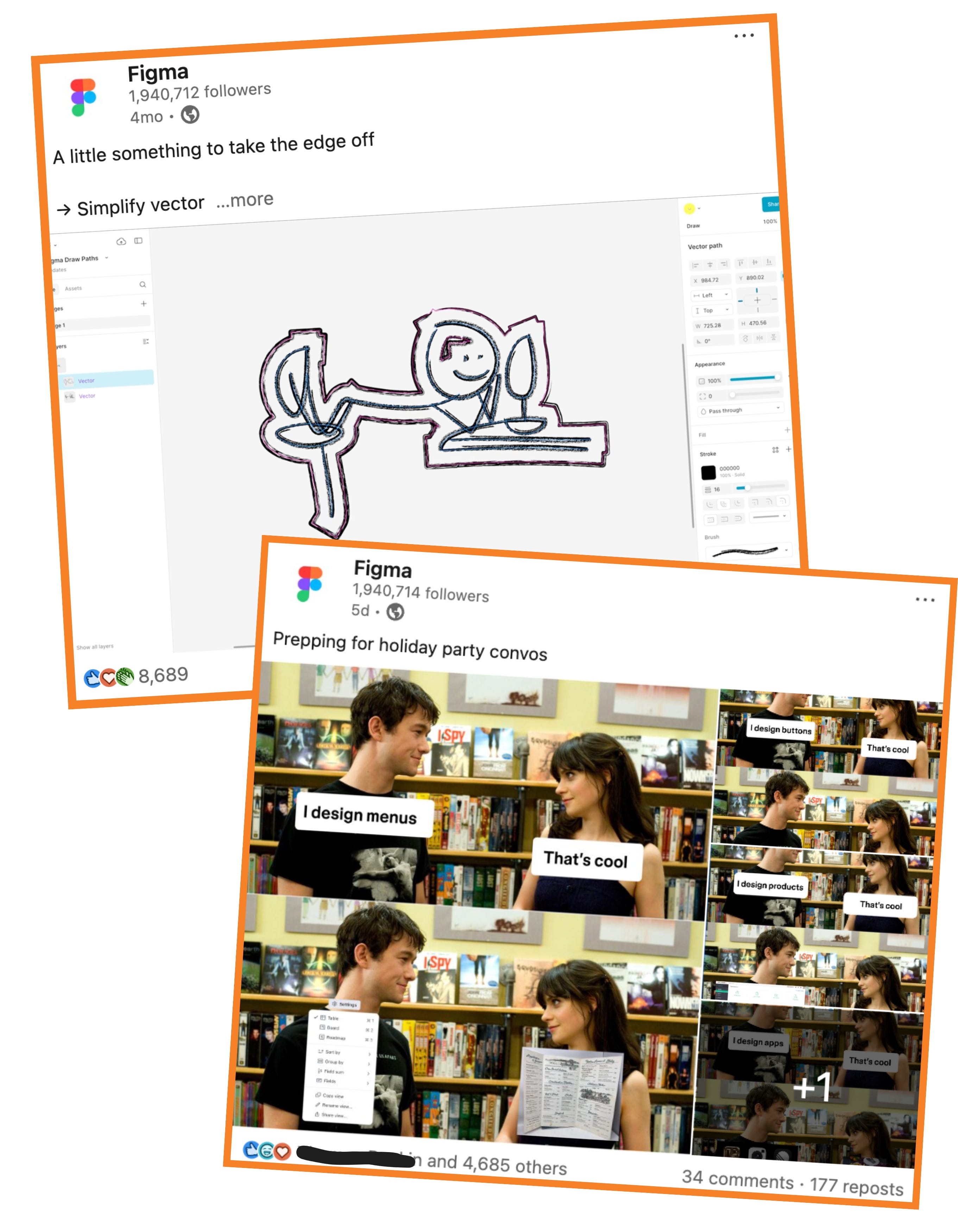
RK: Figma is one of the few company pages that I really enjoy following on LinkedIn. Can you break down your strategy there? Anything you’re seeing work really well right now?
YK: Thank you! That means a lot. As I mentioned, when I first started in 2023, we were experimenting a bunch, seeing what sticks and what lands with our community beyond the usual content. I wanted to make sure we stand out on the platform. If people were doing thinkpieces, I wanted to do memes. Think lots of no copy visuals and memes that conveyed a IYKYK. I can hear lots of marketers screaming, “No copy or link?!” but it works for us.
We also make sure to use the tools and surfaces available to us. For instance, we have different surfaces for content. We have been using LinkedIn newsletters and articles for our editorial, longer form pieces, and we try to keep our always-on posts a bit more fun and playful. If the platform offers a unique feature or product, we always try it.
RK: I know you also work on some of the bigger brand campaigns—like this Schema announcement in the form of a perfume ad and this dramatized (maybe) movie of making a deck for announcing Figma Slides. What does the creative process look like for these moments?
YK: I love that we get to build this world for design and designers and use formats that are unexpected. We usually first brainstorm with the product marketers and product teams to figure out the technical aspects and talk through how that can be incorporated into the story. For Schema by Figma, we thought about how much work and detail goes into maintaining a design system and started from there. We worked with Director Kyle Sauer and he pitched this idea of a perfume ad telling the story of Sisyphus. PERFECT.
We try to think beyond the product tutorials and demos and ask ourselves, what is that tension we’re playing with? There’s an interesting balance, especially when it comes to the more technical features. How will someone who might not understand the product deeply understand and relate to the story? There’s always that nugget of truth that will hit someone’s emotions and that’s what we’re striving for.
RK: Speaking of, do you have a response to all of the “storyteller” discourse happening online right now?
YK: Storytelling is an integral part of marketing, comms, editorial and the teams I’ve been on so I’m glad more companies and leaders understand how important it is to an organization. I can also see why it’s polarizing, in the same way people used to (and maybe still think) about the word “Strategy.” It’s nebulous and everyone has a different interpretation of what it means and covers. These titles and roles will continue to evolve, but as long as you’re not using the words “ninja,” “rockstar,” or “guru,” I’m all for it.
RK: A big piece of your job is covering Config and other big events. Are there any posts you’ve created at these in-person conferences that have performed particularly well? I know a lot of social media teams struggle with making engaging content at big IRL brand moments.
YK: One way is to partner with creators and people in the community to do coverage as their excitement is so palpable. For Config this year, we turned our handles into “Config Crave,” an iteration of Pop Crave. It was a risk but it gave us more freedom in our language, and the way we talked about our launches and updates.
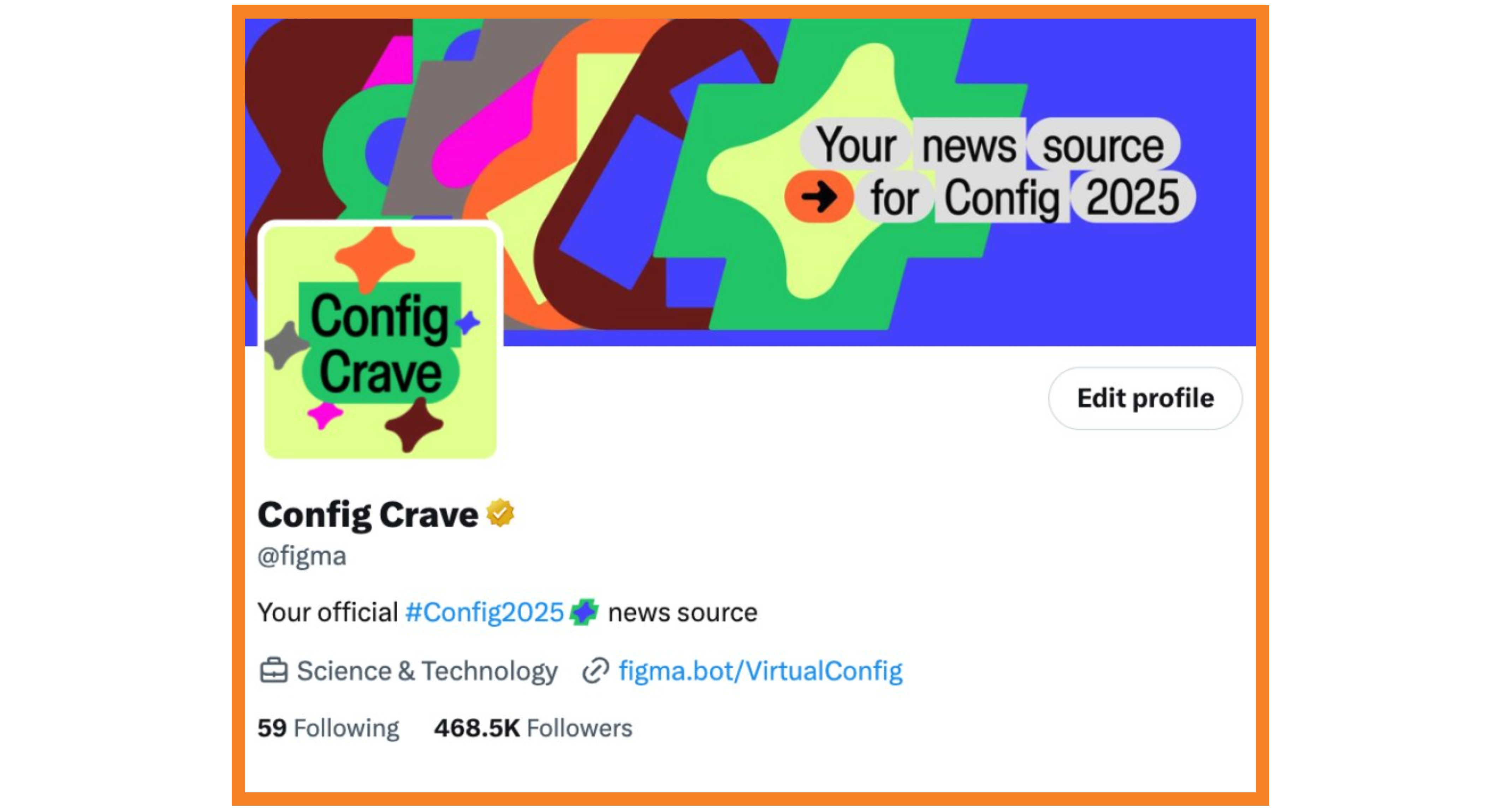
My job also feels easy for Config because our cross-functional teams are so good at thinking about the overall experience. We worked with designers, Chelsea and Dro, from our Brand Studio team to create custom stickers, speaker cards. Jordan, the Head of Community, was already working on a custom plushie named Otto (Layout) that we then integrated into this “Config Crave” world.
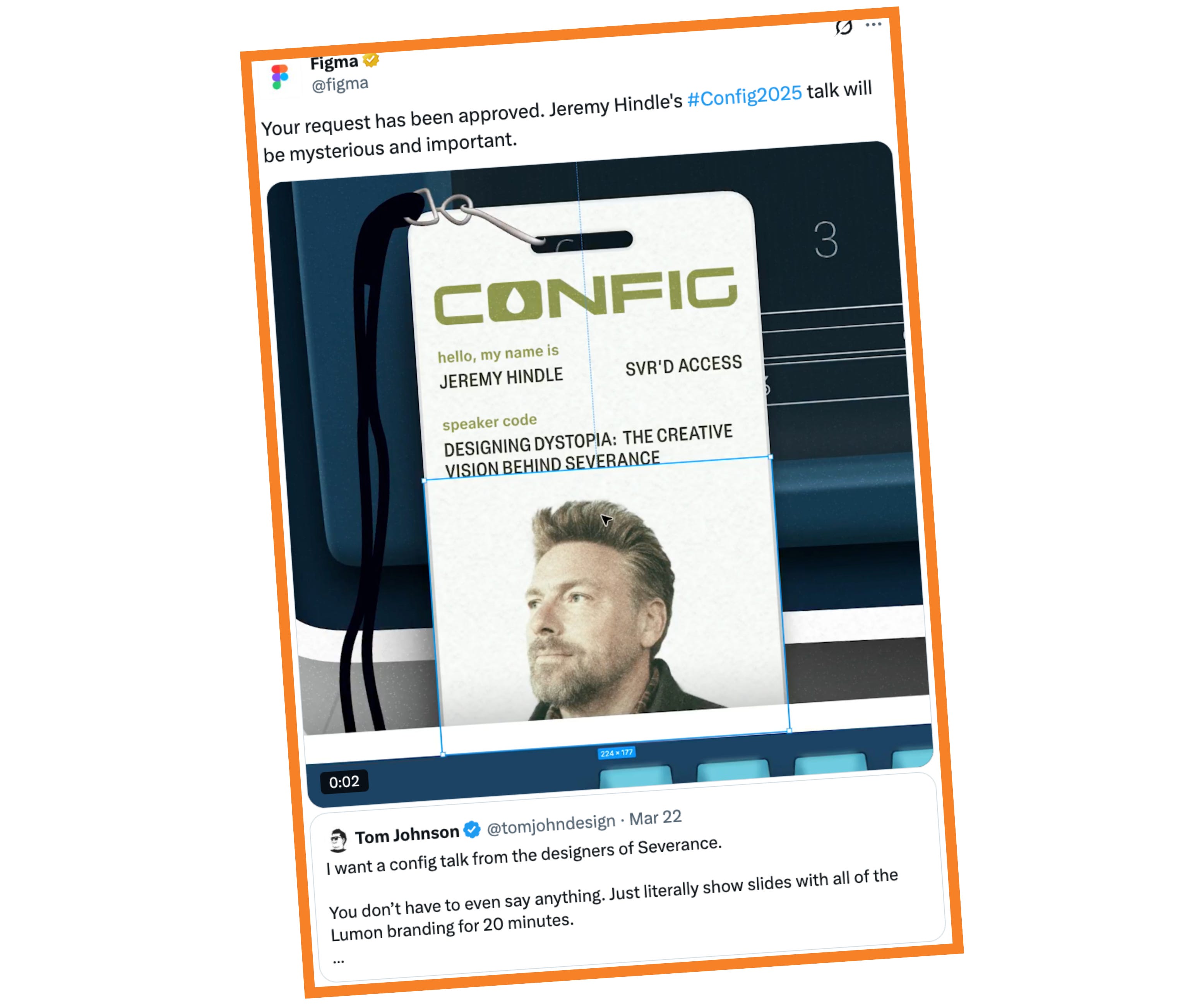
Another great moment from Config: our experiential team saw a tweet from designer Tom Johnson about wanting Jeremy Hindle as a speaker. They made it come true!
RK: You’ve worked in social media and marketing for over 15 years, what still gets you excited about this industry?
YK: I love how much things change, how much new technology there is to learn, and how the platforms and communities evolve. Never a dull day in social. I appreciate how the newer generations embrace remixing jokes, formats, sounds. They’re not afraid to make fun of the status quo and they’re so great at breaking some of the processes to find new ways to “hack” each platform. I am always surprised by the type of comedic and visual creativity that pops up on my feeds and how differentiated it feels across platforms.
RK: Finally, any predictions around where social media is moving?
YK: Maybe wishful thinking, but I do believe we’re going back to the AIM and AOL days. The rise of niche communities and group chats that lead into IRL events, meetups, and activations. The Figma community has always been so great at bridging that gap and I see more brands leaning that way. I have seen and think we’ll continue to see a major shift in how people are using social as a starting point to connect with each other in the world.
With the conversation around “AI slop” and “fast content,” I see more people appreciating and going back to “handmade” creative and longer form content. We need the world of Pee-wee’s Playhouse and Mister Rogers back: stop-motion, animation work, with people working together to build something. Build something real.
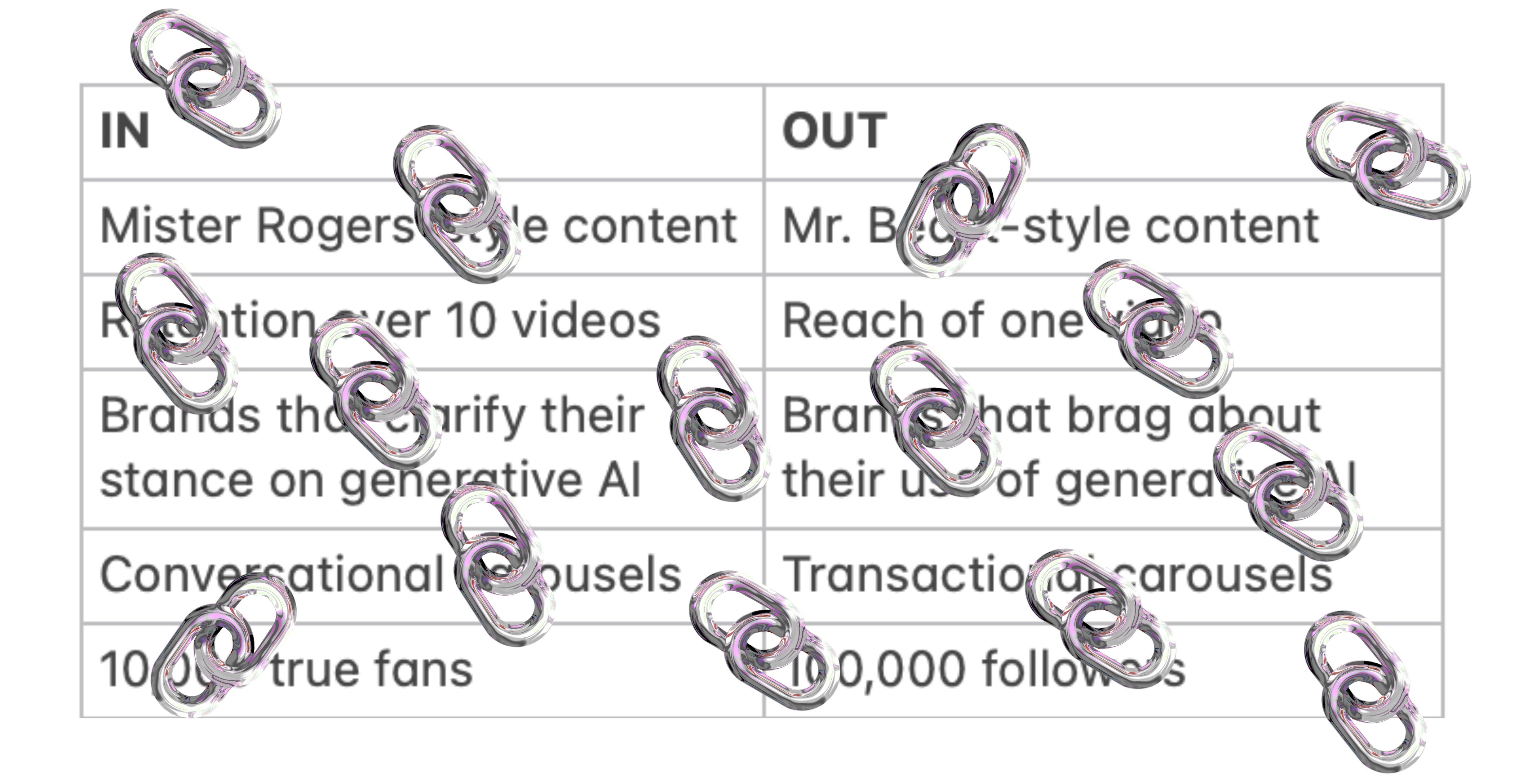
On Tuesday, I sent out my social media ins and outs for 2026. The response has been enormous! Thank you to everyone who has shared the post.
Finally, if you enjoy free interviews like this one, you can upgrade to a paid Link in Bio subscription. You’ll get weekly strategy newsletters and quarterly trend reports, along with access to the Discord community.
It might even be an educational expense at your company! Here’s a template for you to use when asking.
YOSUB!!
My favouritest channel!!