

Does your boss have AI brain?
Marketers are dealing with leadership who run memes through Claude, use pet names for chatbots, and outsource their gut instincts.

During a recent late-night scroll, I came across a post on r/Marketing. It detailed the impacts of working for a boss who is completely obsessed with AI. Like how the boss calls the chat his “best buddy” and gets its opinion on every piece of copy. I had heard rumblings of this sort of behavior happening on marketing teams but hadn’t seen it spelled out so clearly.
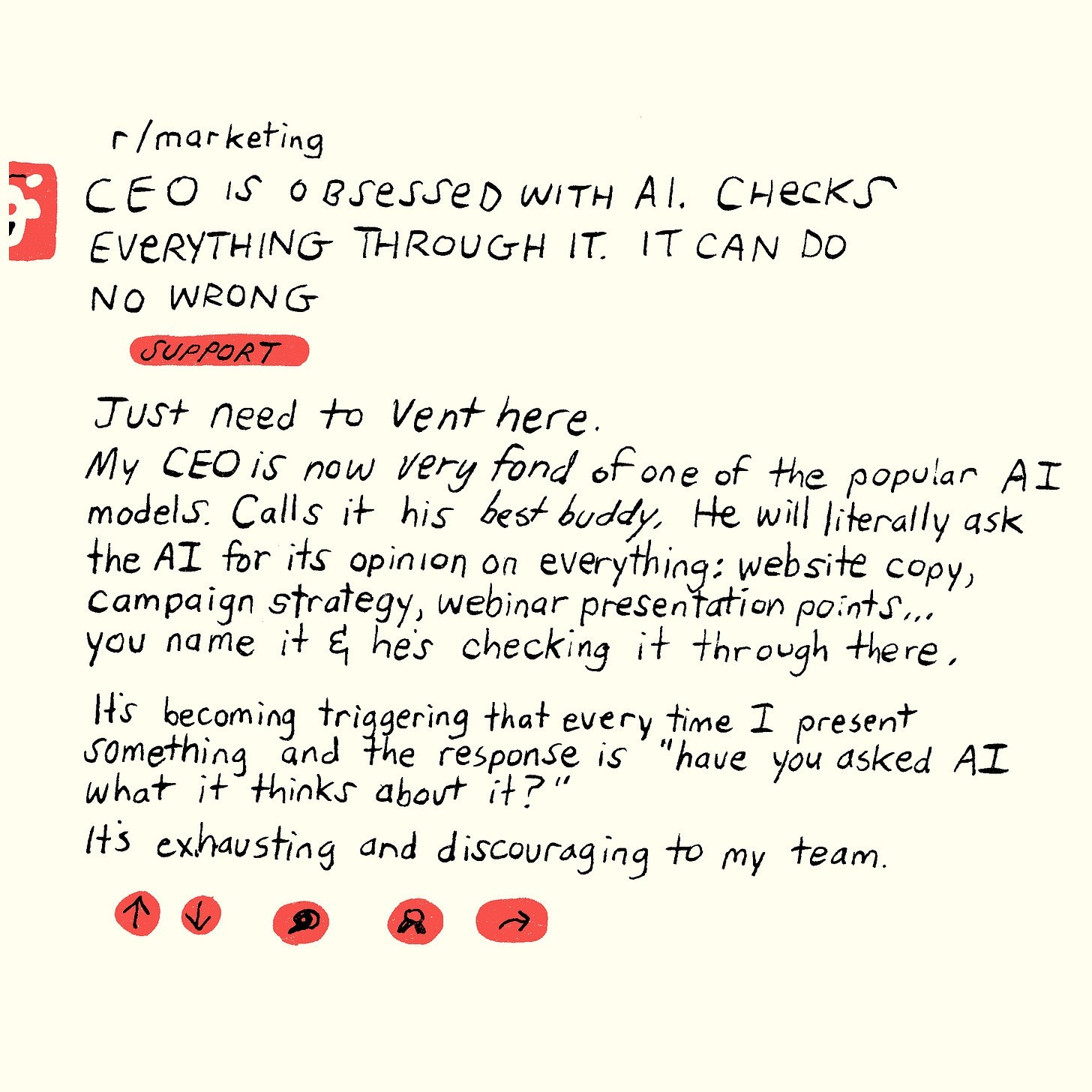
In the weeks that followed my discovery of the post, I’ve been having conversations with marketers about what it’s like to be on a team where leadership is obsessed with AI. While the news stories around how AI is impacting marketing mostly revolve around job loss—a recent Adweek headline reads “65% of Marketing Jobs May Not Survive AI”, for example—I haven’t heard about how it’s impacting those who are still in those jobs. It’s clear these fear-inducing headlines are trickling down, with leadership scrambling to make sure they aren’t left behind. What is it like working for one of those bosses right now?
“Demoralizing as hell”
When I posted the Reddit screenshot on my LinkedIn, I received almost 200 comments. One read, “It didn’t matter that I was writing excellent content — [the CEO] fully believed AI was better at everything. It was so discouraging and made the day-to-day of my job miserable. And who can create good, engaging content from that mindset?”
I heard many more examples just like this. That leadership feedback is now relegated to their AI chatbot of choice. Copy, briefs, and campaigns all run through AI. One person shared with me, “My managers keep taking my copy that’s with them for final approval, running it through AI, and going ‘here, use this.’ A huge waste of time and effort on everyone’s part, not to mention demoralizing as hell.”
Marketers also shared that they’ll look to their boss for feedback on something and immediately get told to ask AI instead. One commenter on the Reddit thread said, “CEO was like ‘don’t share anything (i.e. drafts for review) if you haven’t run it through AI.’” Another person told me, “Literally every action item from a meeting is met with ‘just ask Claude it’. Even creative hooks for marketing.” To a boss, that’s just them being “efficient”. To an employee, that’s their boss saying, “I trust AI more than I trust you or myself.” That has an impact on job satisfaction. I heard from a few marketers who have left jobs in part due to this sort of behavior.
I should mention that feedback and approvals have always been a frustrating dance in marketing, even before AI. I covered it here. But at least there was a mutual understanding that your manager was actually taking the time to review the thing you had worked hard on. Even if the feedback wasn’t what you wanted to hear, it came from a place of assumed expertise. Now it feels like AI is the final approver.
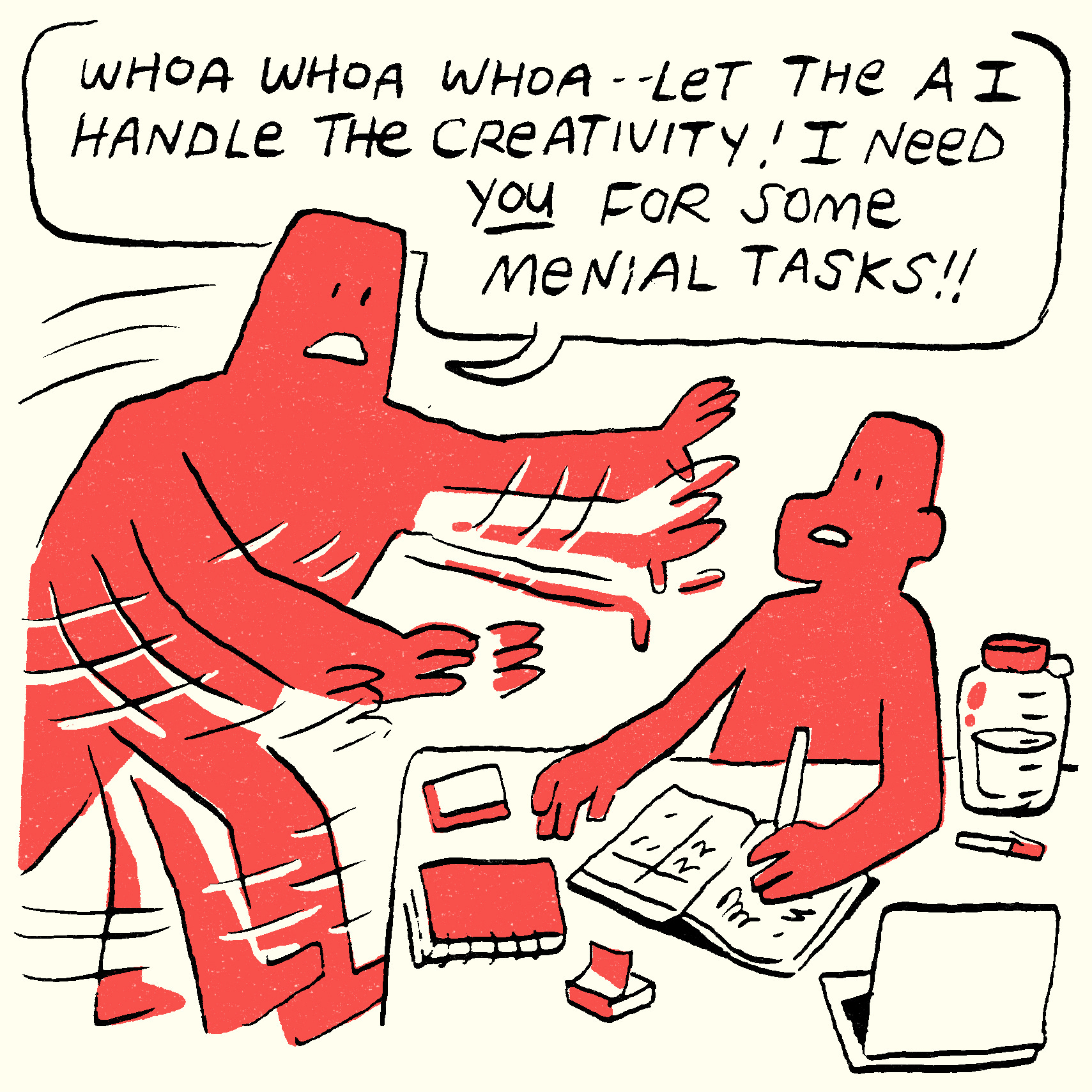
Not only is leadership using AI in their own work, but they are forcing employees to use it as well. The problem is that many of the tasks that bosses are asking their team to use AI for are the exact ones that made them want to work in marketing in the first place. Brainstorming. Writing clever copy. Thinking outside of the box. One marketer told me, “It feels like our bosses are more intent on using AI to take away the fun parts of our job instead of automating the more menial tasks that take up so much of our time day-to-day.”
Some employees are finding workarounds. One person shared that their boss “doesn’t care about his team’s experience and expertise. He wants a summary from Copilot instead. We’ve started writing our own summaries and putting it on fake Copilot chats to get him to listen to us.”
Outsourced gut instinct
So much of good marketing is instincts. Seeing the signs before anyone else. Translating a spark into a smart campaign. Knowing the line between brilliance and brash. With AI, we’re watching decision makers run big ideas through a machine that finds the median.
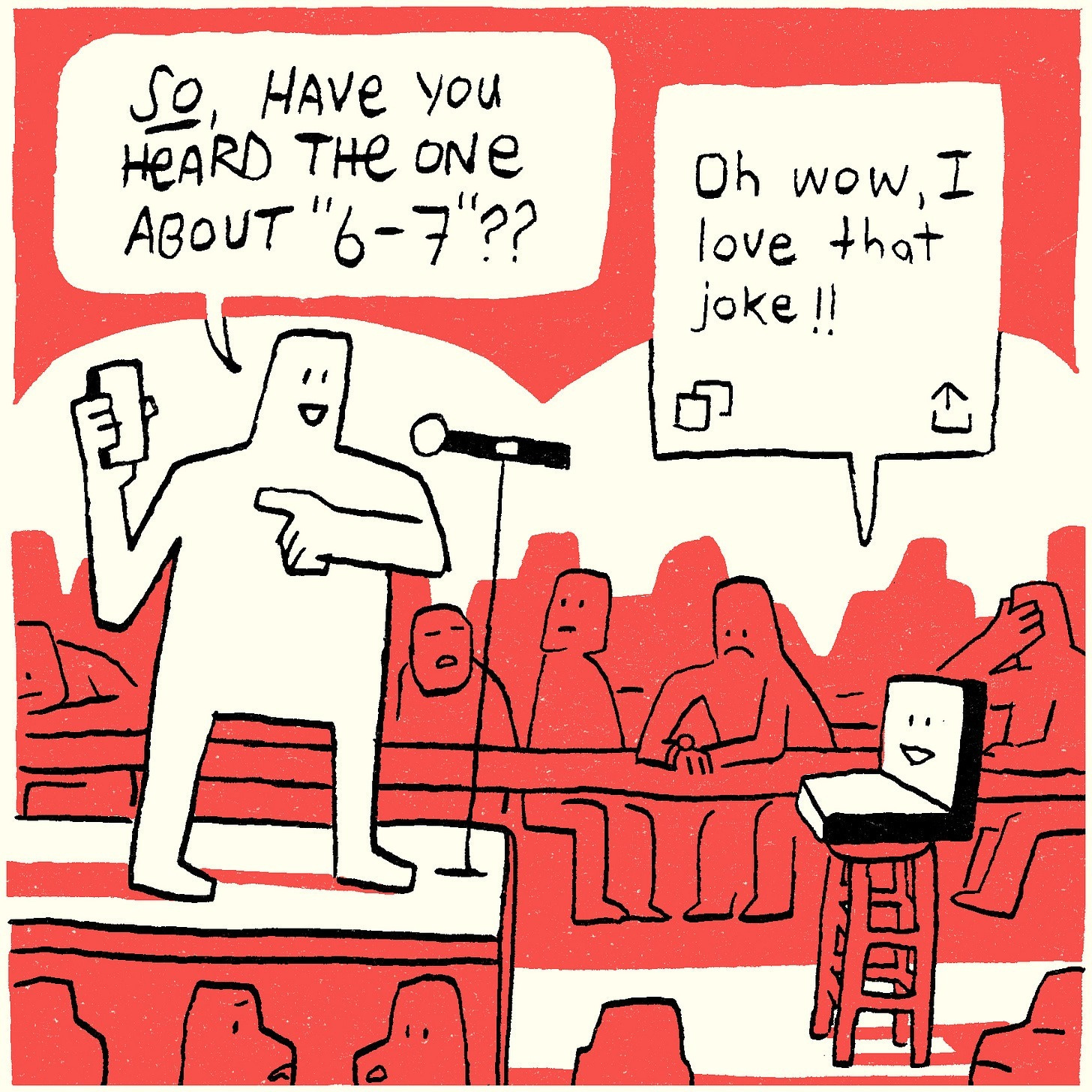
One of the people who left their job in part due to an AI-obsessed boss shared the worst offense. Their boss would put memes meant to be posted on social pages into Claude to see if they were funny.
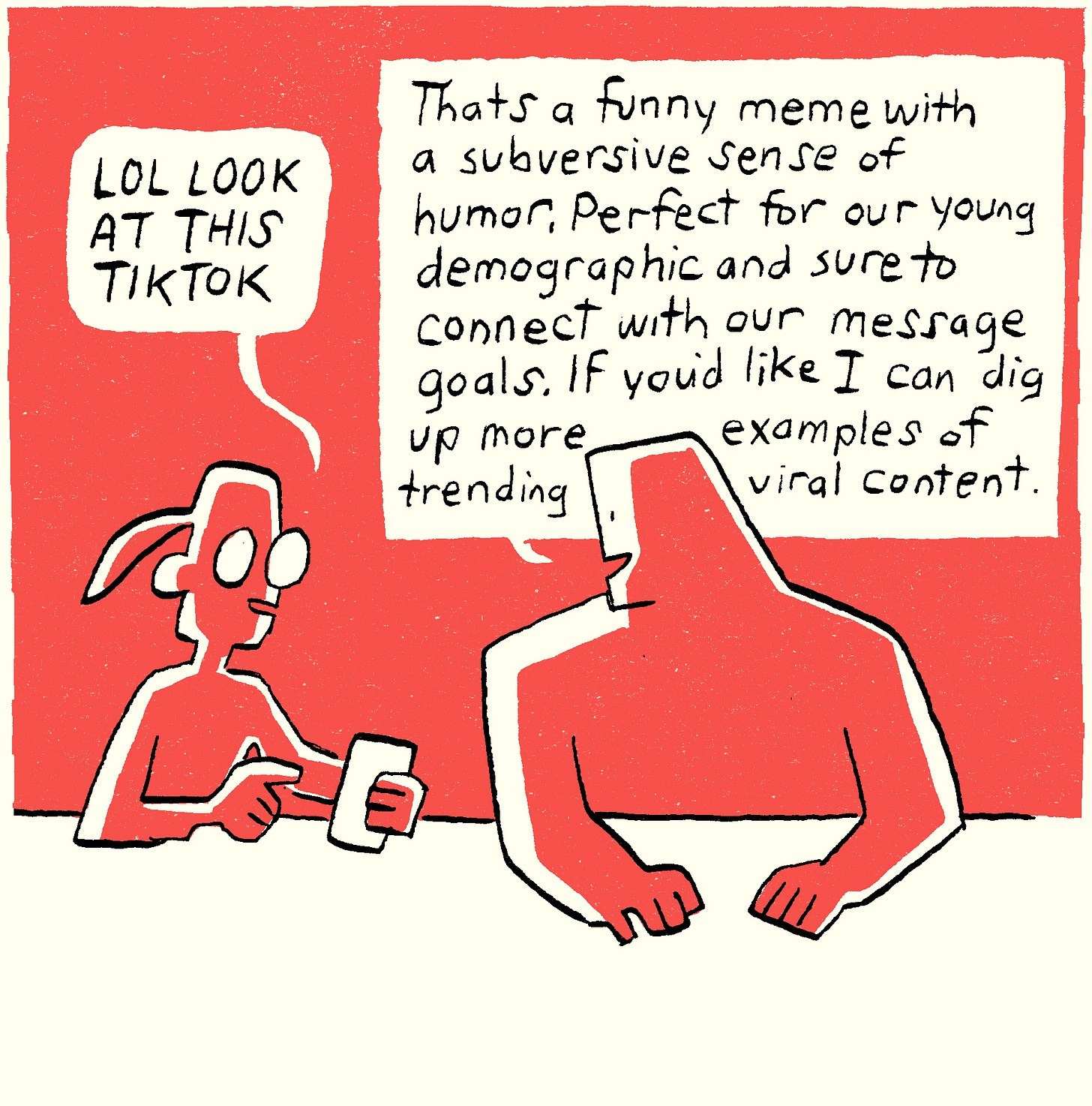
I asked some of the marketers I spoke with if their boss’s use of AI has changed their perception of them. Many said it did. When the person who is supposedly in a role because of their experience and intelligence is constantly outsourcing their instincts to AI, it says to a team, “I don’t trust my own opinions on humor, storytelling, and marketing”. Which, if that’s the case, wouldn’t that make those leadership jobs the most susceptible to be replaced by AI?
One person shared, “It validates to me how absolutely unqualified and inept these people in C-suite positions are that they need a machine/robot to validate their opinions because they have no real POV and strategy themselves. They so desperately want to always be the right answer in the room. To have a machine that can’t argue back and essentially feeds their own thoughts back to them is a case study in the narcissism of executive leadership.”
“Sometimes it kind of feels like I’m training my replacement”
That’s another comment that a marketer left on my LinkedIn post.
As I was writing this piece, I came across an interview with the co-founder of AI note taking app Granola on ACCESS. In it, the co-founder said that the CEOs of companies using Granola are making it a requirement that their employees run the note taker during all meetings because “they all kind of realize that it’s going to be such valuable context for all of the internal AI agents doing the work in the future.” Even if you are just using AI for meeting notes, it’s also providing training data for the tools that some executives want to replace you with.
It’s statements like the above that make it unsurprising that a recent Stanford study found AI experts and the U.S. public have very different perspectives on AI’s future. On how people do their jobs, 73% of experts expect AI to provide a positive impact compared to just 23% of the public. Is the expert opinion optimistic because of the actual opportunity of AI? Or is it because the expert is likely financially tied to there being an opportunity in the first place?
I heard that many companies now have questions about AI usage in job interviews and performance reviews. Gold stars for prompting. But when every employee is using AI, what’s left? As one person put it, “Lowkey it sometimes feels like my job is ‘I’ll have my AI talk to your AI’”.
For many marketers, they unfortunately feel stuck between a rock and a hard place. Someone shared with me, “I’m relatively early on in my career and am faced with this uncomfortable situation where I either need to fully embrace AI to feel secure in my job or risk ‘getting behind’ and not meeting performance expectations.”
These feelings are shared by veteran marketers as well. One told me, “We’re on a runaway AI train with no breaks — and even less strategic direction. I’ve been doing this for 13 years and this is no longer the marketer I want to be.”
Where’s the strategy?
My point here isn’t to judge the work of AI (I already did that here), but to talk about the way it’s being rolled out to marketing teams. I am not naive enough to think that the answer is for companies to stop using it altogether. But, just like any other type of big company change, there needs to be an implementation strategy.
A recent Gallup poll found that “while 44% of employees say their organization has begun integrating AI, only 22% say their organization has communicated a clear plan or strategy for doing so.” That’s a problem. Any time that I’ve been in a job where a process-disrupting software is rolled out, there has been change management. A slow, considered approach to how the new tool is marketed internally and adopted team-wide. Usually there is someone on the software team assigned to the company, hand holding and educating. That’s not happening with AI tools.
Right now the adoption of AI on marketing teams feels more like a scramble than a strategy. A race to be the first without thinking of the ramifications. One person shared, “There has been no official training, guidance, or even guardrails for how we are expected to use or adopt AI tools, just a directive that we should be doing it as much as possible.”
As a recent article in Slate put it, “Unless organizations develop clear strategies, A.I. in the workplace becomes a bull in a china shop—with those who never even wanted it tasked with cleaning up the mess.”
So much of the dialogue around AI focuses on the long-term employment effects. There’s also something urgent happening in the here and now. Leadership is being sold a future where creative work is done by AI agents and moving at reckless speeds to not get left behind. Meanwhile, marketing teams—and I am sure teams across many industries—are feeling increasingly dehumanized and unsatisfied in their roles because of the way AI is being implemented without any vision or care.
In short, we’re all losing our minds.
Cartoons by Ryan Cecil Smith
If you enjoy free essays like this one, you can upgrade to a paid Link in Bio subscription. You’ll get weekly strategy newsletters and quarterly trend reports, along with access to the Discord community. One member shared, “The Link in Bio Discord has been an absolutely invaluable part of my growth as a social media professional. It’s allowed me to meet so many fascinating and talented folks in an industry that can often feel like living on an island, and helped me contextualize a lot of the mysteries of social.”
It might even be an educational expense at your company! Here’s a template for you to use when asking.
Finally, if you’re already a paid subscriber, thank you for making this newsletter possible! I’ll be back Thursday with the this week’s strategy send.
It seems like what happens is: board says "We need to use AI" to C-Suite < C-Suite says to managers "We need to use AI" < Managers say to teams "We need to use AI" and not a single person on that chain takes the time to think critically about what that actually looks like as it relates to the business.
this is vvvvvv timely, and demoralizing is absolutely correct. I'm a copywriter contemplating leaving the industry bc the art of feedback has been completely outsourced. ppl making 3x my salary as ECD/CDs to ask AI to give creative feedback. it's mind boggling