

What makes a good social video?
I talked to Arjun Ram Srivatsa, who has worked with The New York Times, Pitchfork, and GQ, about his approach to making videos.

A quick note before we get into today’s newsletter! On Wednesday December 10th, the Threads team and I are hosting a private video call exclusively for Link in Bio subscribers. We’ll be digging into how the Threads algorithm works, ways that brands are finding community on the platform, and what types of posts perform best. There might also be an announcement. I’m so thrilled that Emily Dalton Smith, Head of Product at Threads, will be joining to break things down! This is part of an ongoing series that gives Link in Bio readers access to the people behind some of the most important platforms for our jobs. You can RSVP here.
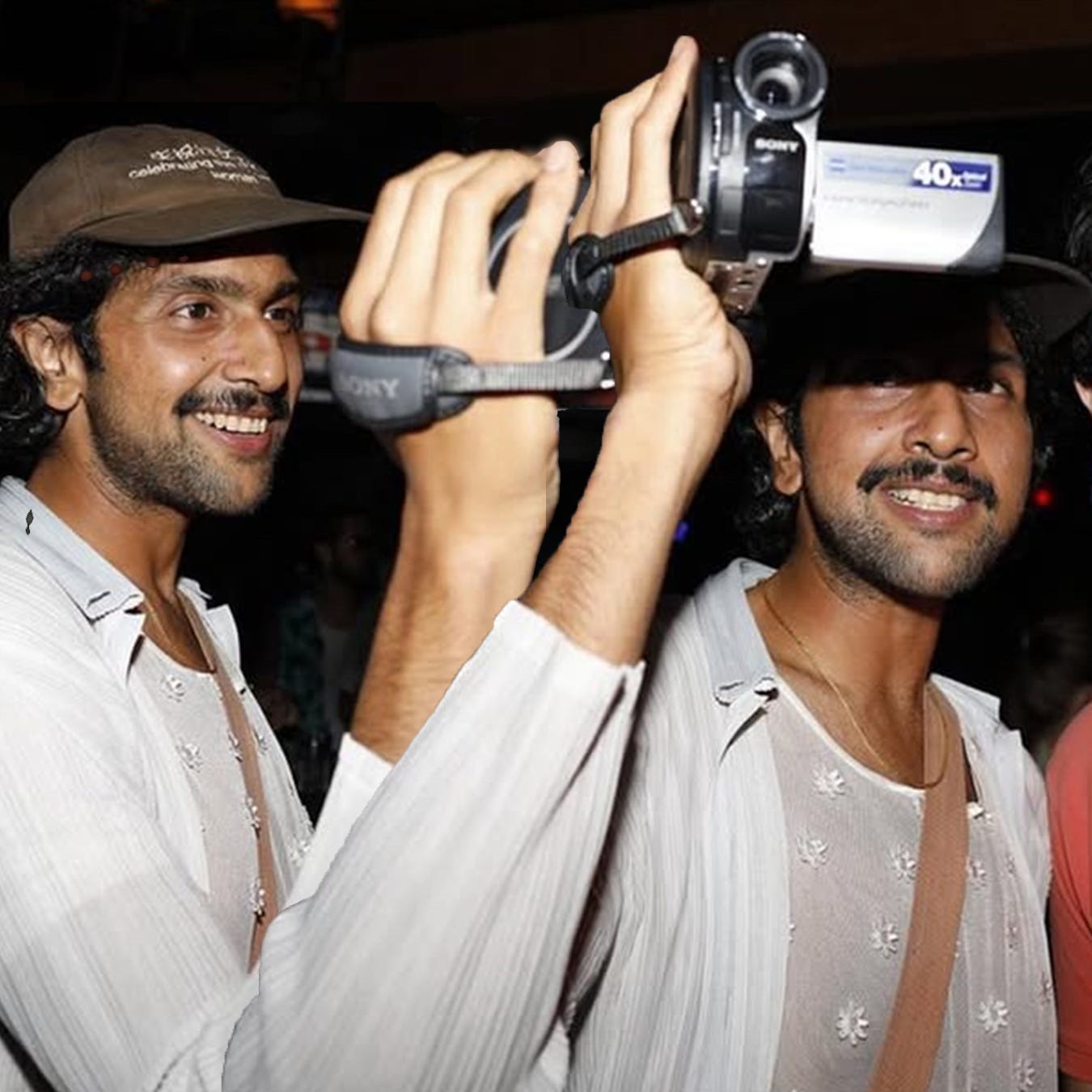
A big piece of working in social media is knowing how to work with creative people. The posts I’m most proud of usually come out of conversations and collaborations with designers, art directors, and video makers. They provide an artful push to my best practices pull. That tension is where the good stuff is made. I’ve been lucky enough to work with some very talented creative people throughout my career. One of those people is Arjun Ram Srivatsa.
I worked with Arjun when we were both at Condé Nast. He knows how to make any video 100% more engaging, weird (compliment), and fun to watch. During his time there he made social series’ for Pitchfork, digital covers for GQ, and a short documentary for The New Yorker. You can watch his very entertaining reel here.
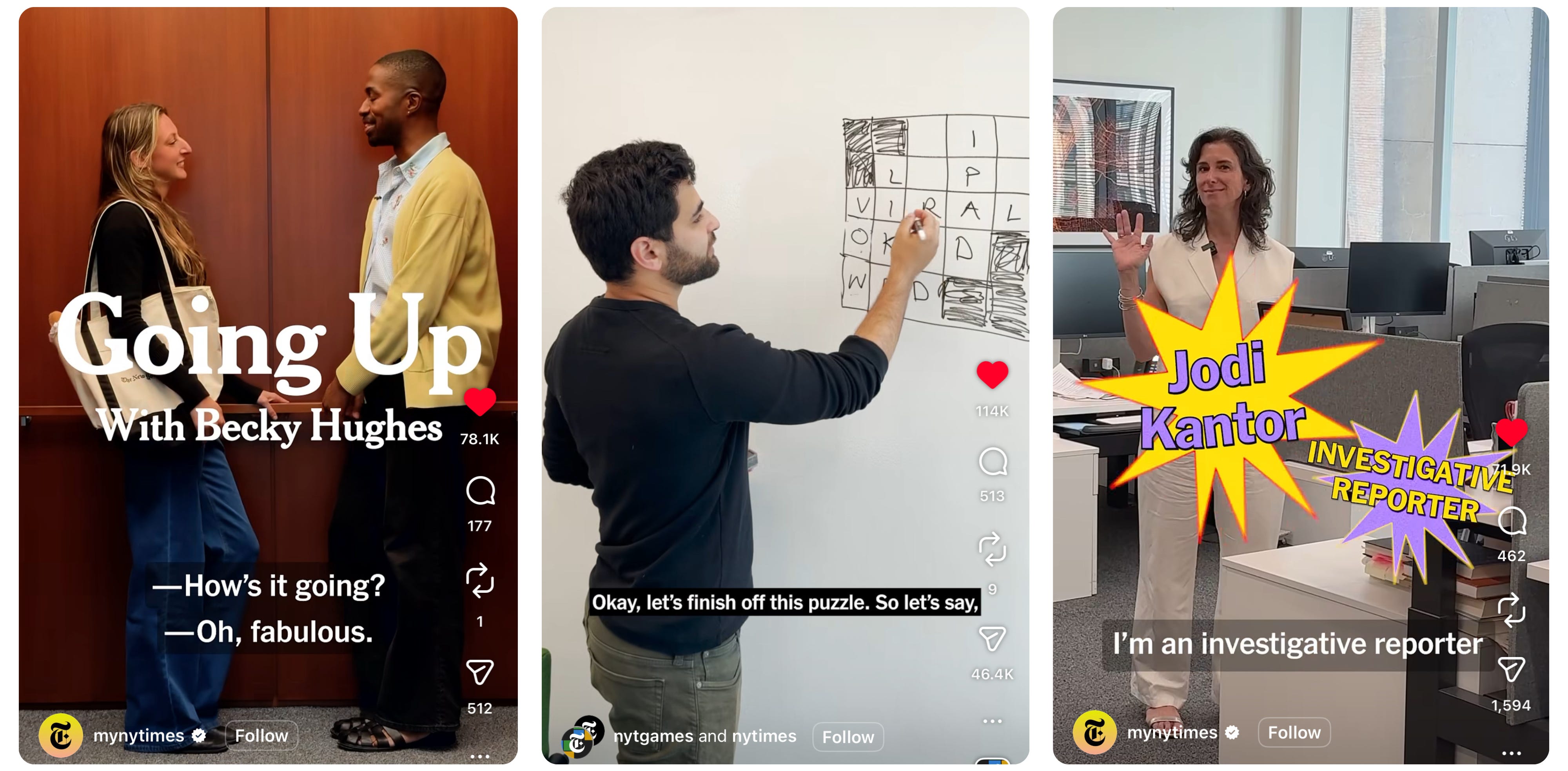
Now he’s on the Social Creative team in the marketing department of The New York Times, making videos for the @mynytimes and @nytgames social accounts. These two accounts are some of the best examples of employee social storytelling. Through series like Desk Tour, Going Up, and This or That, the accounts give viewers an entertaining peek into what it’s like to work for The New York Times, from music critics to Wordle builders, investigative reporters to podcast hosts.
For today’s newsletter, I talked to Arjun about his process for making social media videos. What he thinks of best practices (“I strive to make beautiful and meaningful videos. That’s my best practice.”), how to get people comfortable on camera (he has a clever trick for recording voiceover), and the various ways he keeps viewers engaged (“I edit as if I’m losing my own attention, constantly trying to impress the little man with the remote control in my head”). If you’re feeling at all uninspired about the state of video, I can guarantee you’ll be reinvigorated by the end of our conversation.
Rachel Karten: If you had to sum up your philosophy or approach when it comes to video, what would it be?
Arjun Ram Srivatsa: I just want to make beautiful things that I like to look at. As a kid raised on ‘90s MTV, I wanted to grow up to become a video artist, and Nam June Paik was always my north star. His colors, vibrancy, speed, humor, and interrogation of the medium remains an undying inspiration. Paik’s TV signal bending techniques showed me how you can create worlds by merely toying with the components of the medium. No footage, no narrative, just noise.
When I want to convey emotions—pain, silliness, sincerity, thoughtfulness, wonder—I first imagine how those emotions can be engendered in the abstract. How can we speak with pixels, motion, color and transitions as our language? Ultimately, we are making things for people to look at, linger on, take in, understand. Video is rhythmic, and if I’m doing my job right, it looks like the way music sounds and poetry reads.
RK: What sort of relationship do you have with social media “best practices” when it comes to video?
AS: I strive to make beautiful and meaningful videos. That’s my best practice. But I also want these videos to feel like you’re hanging out with a friend.
For Pitchfork I made a series called Shop Talk, where editor Sam Sodomsky visited record stores in New York to showcase spaces where music lovers convene, connect, and learn. I also made a series called Front and Center, where me and Margeaux Labat went to concerts to not just film the show but to profile the fanbases that have created communities. For The Times, our It’s Your World series puts the viewer on the street with a journalist, not exactly to show one story they’re reporting, but rather how they approach their reporting and what drives them to engage with their world.
On some level, the videos I work on are an interrogation of belongingness within time and space.
RK: How do you keep people engaged throughout a video?
AS: I have debilitating decision anxiety paired with a deteriorating attention span. Like my namesake, Arjuna, who was torn between fighting for good or sparing his evil family, I am paralyzed by choice (albeit my choices are mostly grocery-related). I edit as if I’m losing my own attention, constantly trying to impress the little man with the remote control in my head. I want to show the world how I see it, bright, fast, chaotic but on purpose. We don’t experience life in order. It’s not a linear narrative where the movie begins and ends. Memory and imagination constantly fold in on the present. When we remember things from the past they become our present. When we dream of the future it becomes our past. I hope that’s a clear answer, I already forgot the question.
RK: How focused are you on those first 3-5 seconds of a video while editing? What makes a good hook, in your opinion?
AS: A good hook isn’t just about delivering the message instantly. It’s about conveying a mood, a voice, a promise.
To me, the first three seconds thing has always made me nostalgic for channel surfing in the 90s. Like, holding a remote control and flipping through your TV, catching glimpses of possibilities. In a way it was like editing, you were creating your own sort of continuous video mashup as you looked for the right channel to stop on. Bright images melted into one another as CRT bands interlaced. I don’t try to trick people with a hook, I try to telegraph an energy.
RK: The editing of this video featuring reporter Anna Kodé is great. There are so many small decisions that keep you wanting to watch. Can you tell me about those decisions?
AS: This video is a part of a larger campaign that The New York Times created around the concept of “It’s Your World to Understand.” My team was tasked with making a video series that showcases how our journalists understand their world.
To understand a journalist’s reporting decisions, we first wanted to show how they engage with the world in their everyday life. Melissa Clark finds inspiration from the farmers market, Tejal Rao discovers new flavors in unassuming restaurants, and Anna Kodé keeps her eyes open to find deeper meaning in everyday objects. We then asked them to explain how being curious drives their journalism.
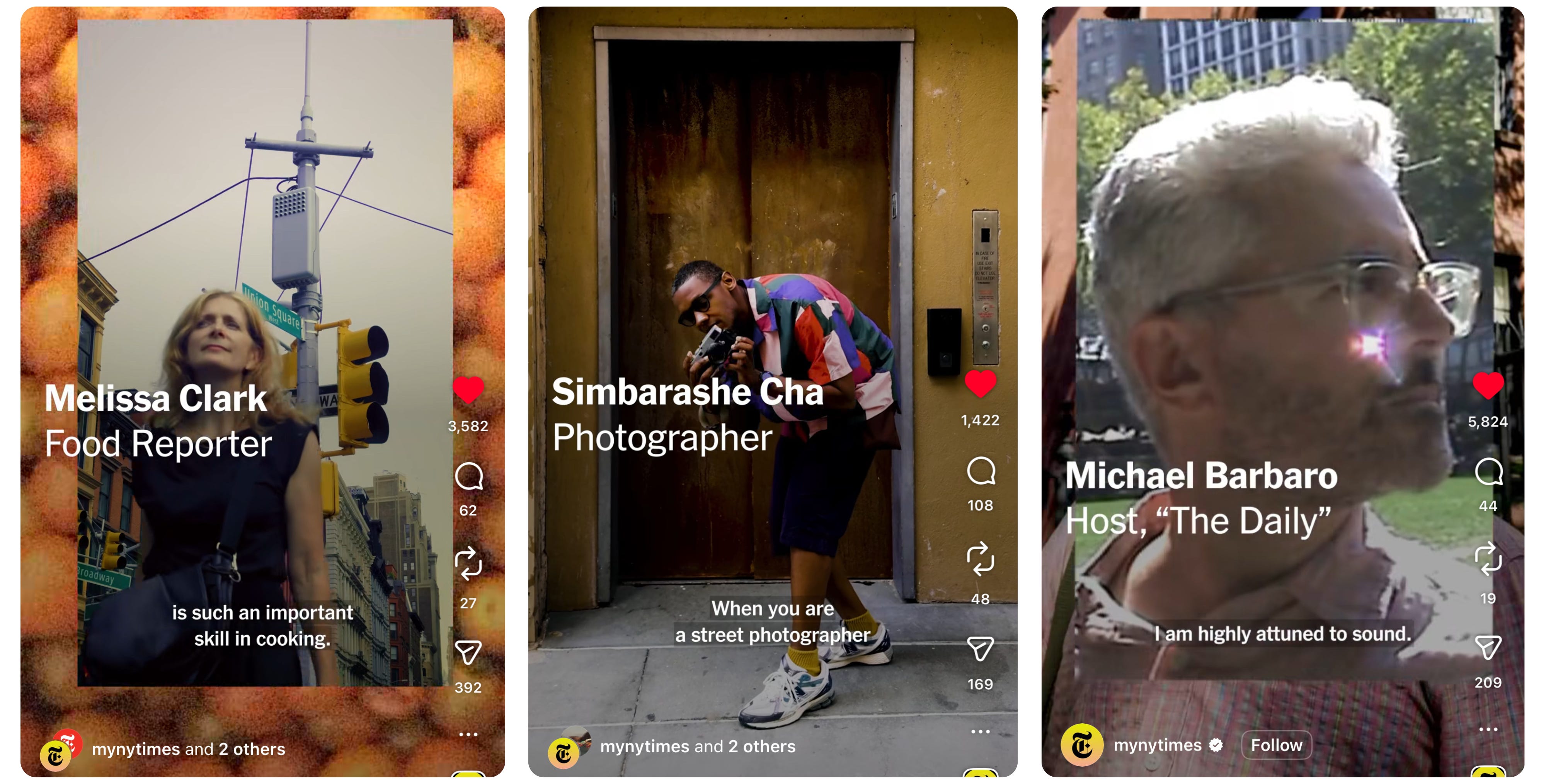
We wanted the series to feel as bright and vibrant as the people we were featuring. So when it came to the edit, we illustrated a world filled with stories to report on, from the clothes people are wearing on the street to constellations in the sky above them. We used techniques like quick and snappy edits, match cut transitions, rhythmic zooms to show viewers that our world is filled with stories, which hopefully encourages them to look for them too.
RK: Do you have any advice for getting people comfortable being on camera?
AS: Journalists aren’t always trained to be on camera. They are all passionate about their work and eager to tell me how they made their story, but it’s hard to get anyone to act naturally with an iPhone in their face. So for these It’s Your World videos, my team decided to skip the talking heads. Instead, I called up the journalist, had them turn on Voice Memos on their phone, and just had a casual chat with them, chopping it up about their process, their personal philosophy, and their work. We wanted to know how they understand their world to show how they help readers do the same. I think it really worked.
RK: Talk to me about a recent video you worked on that you’re proud of. What were some of the creative decisions you made and why did they work?
AS: I’m really proud of the It’s Your World videos we made, especially the ones with Anna Kodé and Kenneth Chang. Their sense of wonder really jumped out at me during the interview. Like, I could watch the video in my head while I listened to them speak. Anna’s eye for connotative meaning is so sharp; her ability to understand histories within objects opens up worlds within worlds. And Kenneth’s curiosity is what makes his science writing so engaging. He asks big questions with such joy and whimsy, illustrating that we still have more to learn. Also, being able to film inside the American Museum of Natural History before it opened was such an insane experience.
When editing this video, I was reminded of my grandfather’s spirit. He was a paleontologist with a penchant for collecting: stamps, coins, brochures, bric-a-brac. Every little thing in the world filled him with wonder. When I was young he would take me to flea markets and garage sales, and then when he was old I would take him. He would hand me a piece of junk as if it was an ancient relic. It’s the type of curiosity that many journalists recognize, and we wanted these videos to resonate that sort of energy.
RK: What’s something more brands should be thinking about when it comes to their social video strategy?
AS: Just make it look beautiful. If not for a target audience, if not for your internal corporate approvals, if not for a larger industry of online video marketing, do it for yourself. We have the ability to put more beautiful things into the world.
RK: Let’s do some rapid fire questions. Social video pet peeve?
AS: Trends.
RK: Most useful tool for your job?
AS: 90% of my job is knowing what to google.
RK: Describe your reels or TikTok algorithm in one word.
AS: Uhhhhhhhhmmmmmmmmmmmhppppphhhhhssssshhhhh...
RK: Share a video from a brand that you saved and loved.
AS: Telfar is the greatest brand of our generation. Like, obvi. This one naturally spoke to me. My friend Dave made this and it blew my mind. Olgabasha made one of my favorite ads of the year and they just put out another banger.
RK: Favorite movie?
AS: Global Groove
RK: Where do you go for inspiration?
AS: I’ve gone viral twice for saying this, but I truly believe we’re only put on this earth to hang out. That’s where I go to get inspired. Philosophical conversations over cheap beer at my friends gallery opening, smoking a cigarette with a stranger in the backyard of an underground club, Saturday afternoons wandering and wondering like a pack of wolves or a flock of geese, nestled in a corner booth at a dark bar with people I love or want to love, catching up with coworkers in the cafeteria, talking to an old neighbor about the weather, book fairs, noise shows, poetry readings, Montez Press Radio, Elizabeth Street Garden, 123, the corners of Canal and Mulberry and Second and Second and Adelphi and Dekalb. As a video artist, when I’m outside, connecting and belonging, I’m able to see possibilities for tone, rhythm, motion, colors, feelings.
So that, and vintage underground community-run magazines.
RK: What do you love about making videos?
AS: I liken life and love to video. Nonlinear, looping, a constant flow of information, bright lights and saturated colors. We don’t sit down in a dark theatre and watch life happen. You pick it up, put it down, and breathe.
If you enjoy free interviews like this one, you can upgrade to a paid Link in Bio subscription. You’ll get weekly strategy newsletters and quarterly trend reports, along with access to the Discord community.
It might even be an educational expense at your company! Here’s a template for you to use when asking.
And if you’re already a paid subscriber, ignore this and thank you!
most inspiring social interview i've read in ages so good
Arjun is the coolest!!