

Focus your feed
A follow-up to my "Post-Social Media" essay.

Before we get into today’s newsletter, an invite! Emily Sundberg and I are throwing a holiday party in NYC next week. Thank you to Notion—the workspace I use to plan this newsletter every week!—for sponsoring. You can RSVP here.
The science of serialized social
In my essay Post-Social Media, I outlined the current social media ecosystem that we’re all posting within. How the FYP ate the follower and why scrolling feels like watching television now. It’s my most-read newsletter ever.
One of the biggest changes I talked about was the role the feed plays. Most platforms have transitioned from follower-based feeds to recommendation-based feeds—programming scrolls with content from strangers. While the “bring back chronological” shouts will always be loud, these changes have, to some degree, leveled the playing field for accounts of all sizes to break out. Engagement isn’t just reserved for the brands with the most followers.
But if feeds are now awareness-driving machines, why do so many brands still fill them with “brand assets”? Too much “launch grid”, not enough “launch story”.
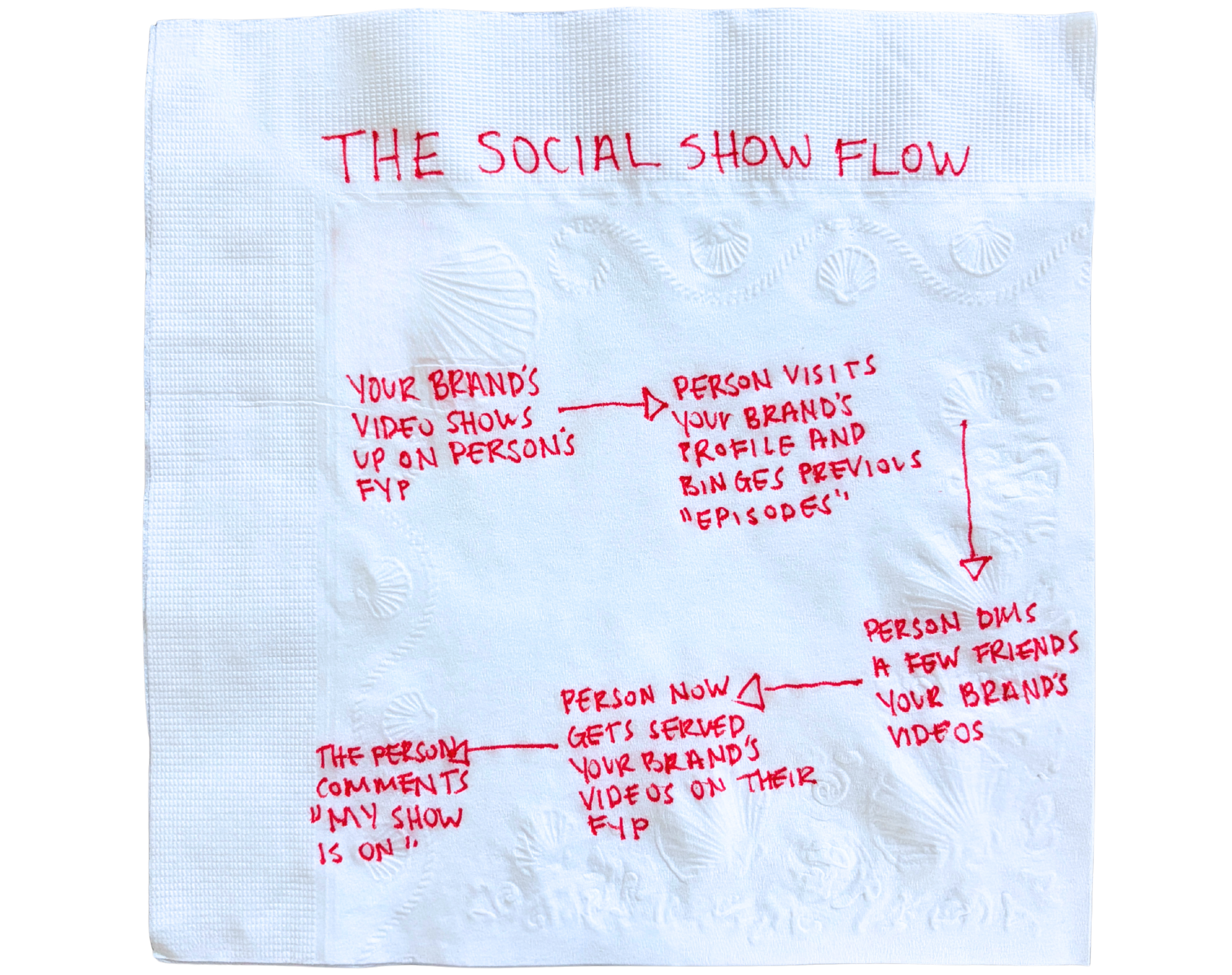
In that essay, I broke down three different approaches to the feed. Today I want to zoom in on the “focused approach” and the science behind why serialized content works right now. I also scribbled some thoughts on the back of napkins, which you’ll find throughout.
I’ll be covering:
The cheese store with 290M views
My conveyor belt analogy for understanding the algorithm
How to turn a viral post into a pilot
Why familiarity hooks viewers
My big advice for small businesses
10 brands with focused feeds
The cheese store with 290M views
“Once I stepped foot in the store I immediately was like ‘this is a show.’”, that’s how Greg Baroth, Digital Marketing Expert, describes his first impression of The Cheese Store of Beverly Hills. He’s been working with the shop on their social strategy for about a year now. Greg told me the store has garnered an impressive 290M views across platforms this year. One of their top comments? “My show is on.”
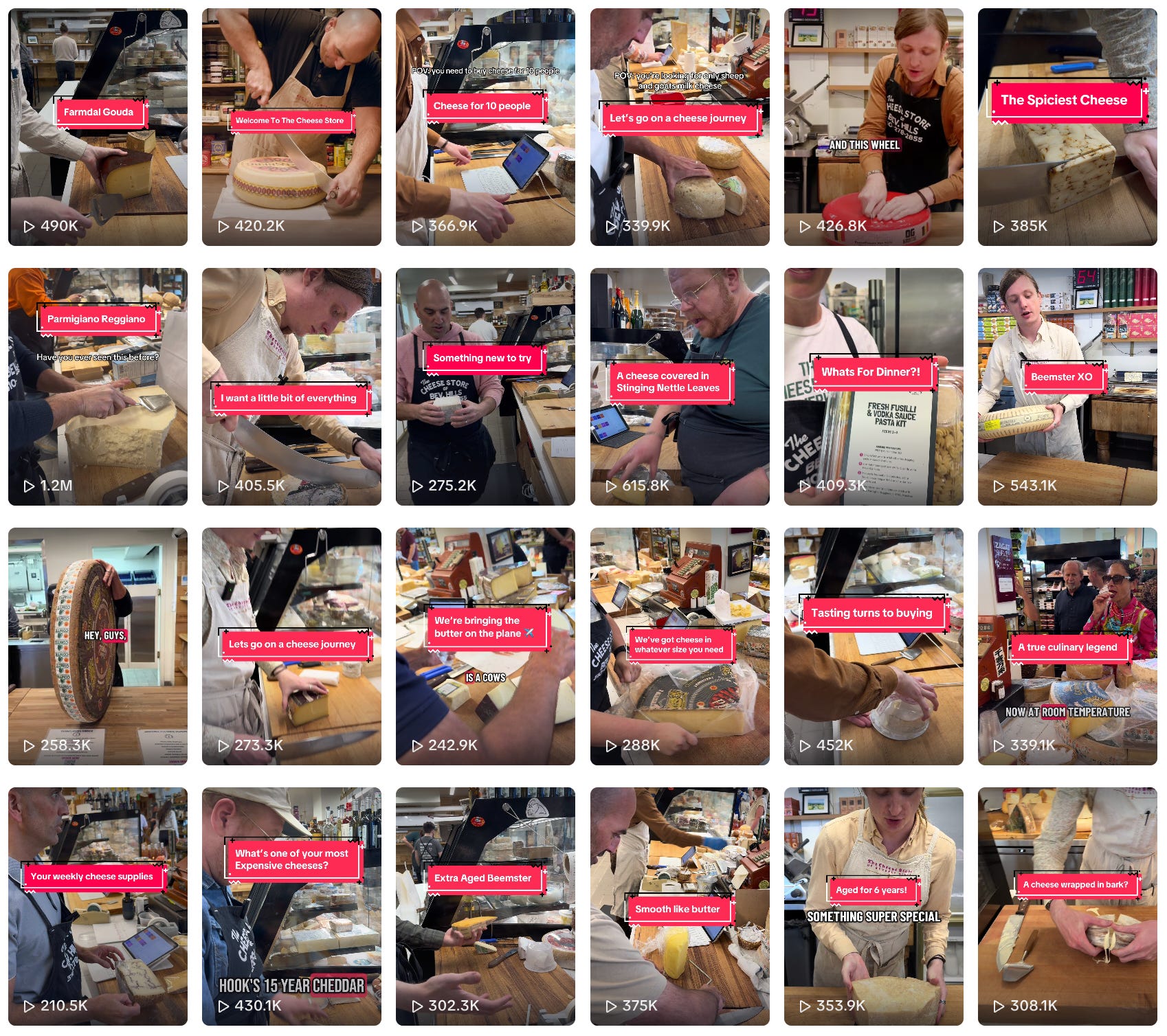
When you go to The Cheese Store’s social accounts, you’ll find variations of the same video: the camera is pointed at a cheesemonger who is helping a real customer figure out what kind of cheese to buy. This video with 4.4M views features the store’s owner Dominick DiBartolomeo, who goes by Dom, helping a customer pick out cheese to surprise her boyfriend with. As the viewer, you feel like a fly on the wall, hoping that maybe there’s a new technology that allows you to try a sample of that complex Vacche Rosse cheese they are describing. There’s tension and payoff. Someone commented, “I love seeing people passionate about their jobs. It’s such a dying thing.”
This wasn’t always the format though. Greg tells me, “I sort of just came in and started making stuff, experimented a bit, and eventually started getting some traction.” He used signals of what was working to dictate what the eventual “show” would be. He recalls a specific unlock moment—instead of filming employees talking right to camera, he tried filming real customer interactions. He tells me, “If you put a camera in front of someone’s face and say ‘go’ it takes a certain type of person (or lots of practice) to be good at that. However, if you step aside and say ‘just do what you’d normally do and I’ll make that work’ I think it just comes across more natural (because it is) and that was really one thing that made a huge difference in the performance of the videos.”
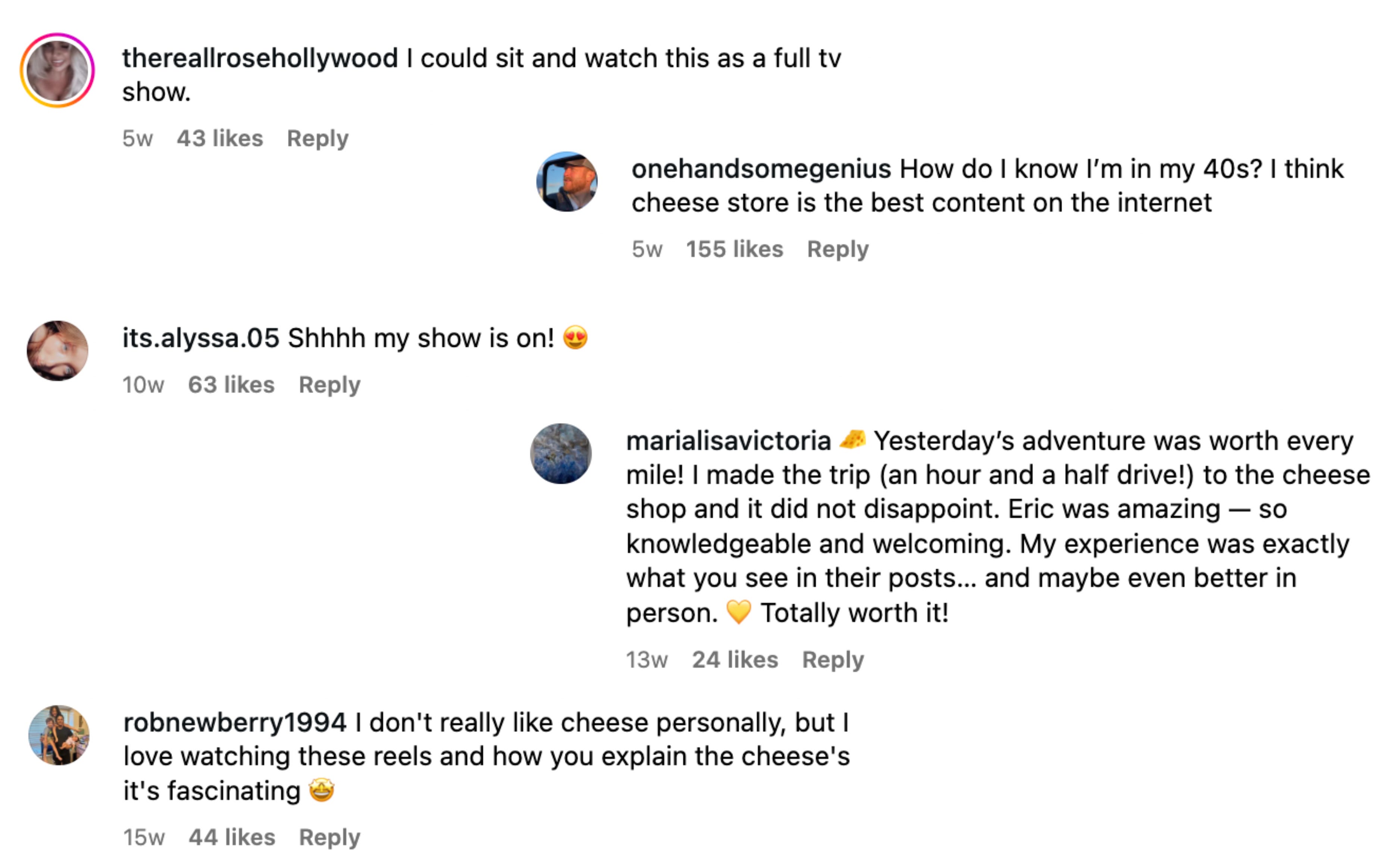
While Greg does call it a “show”, he’s quick to say that the definition is broad. “When we say ‘show’ that doesn’t mean it has to be a polished episodic type show. It just has to be something that the person recognizes as a format that this page has done before and that they either liked, thought was informative, or funny.”
Greg tells me that having a consistent format also helps him streamline his workflow. “I try to batch as much as I can but I’m going in usually a few times a month and sometimes more.” He’s able to create enough content from those shoots to post almost every single day on the account.
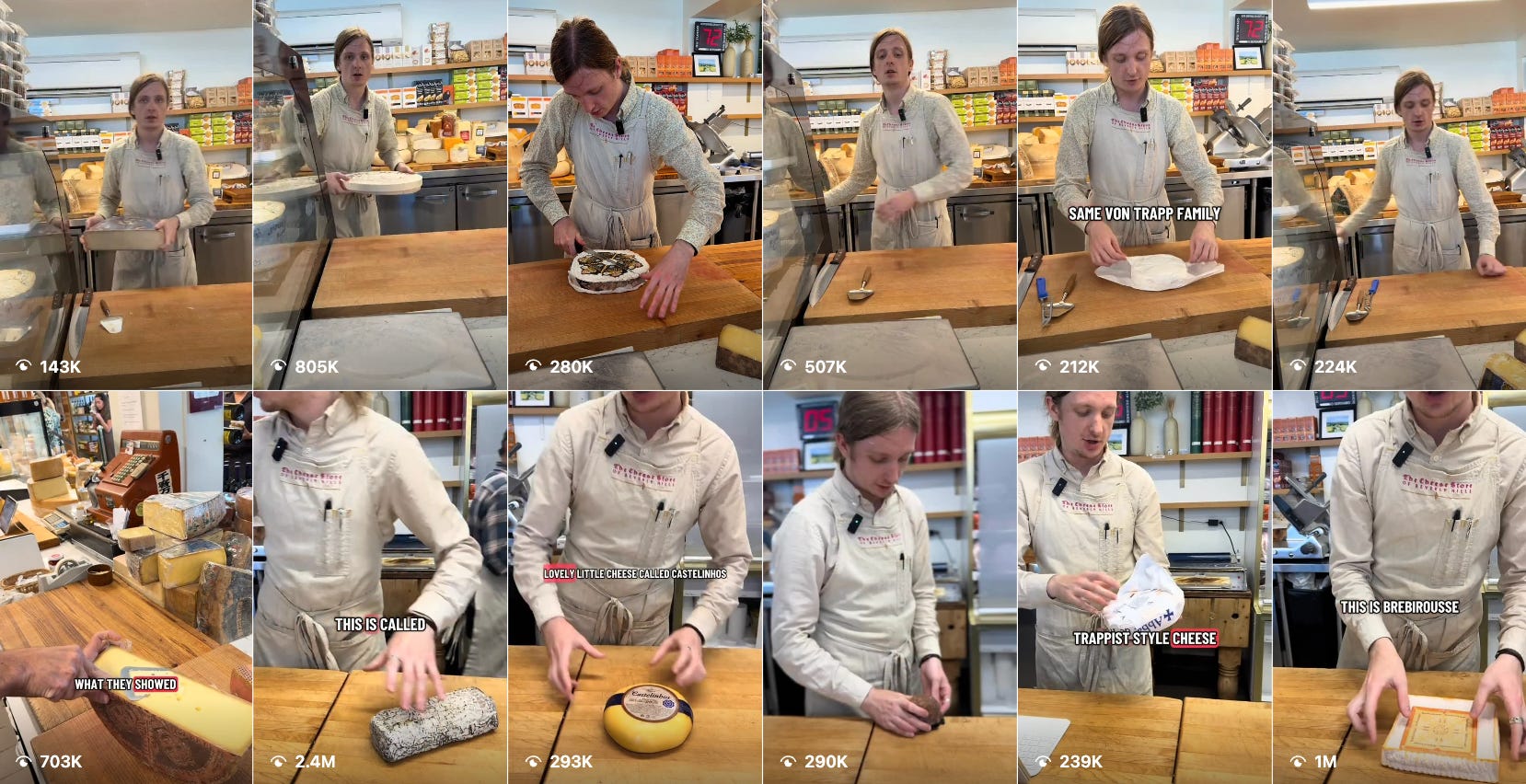
Finally, I asked about how this focused approach to their feed has impacted business. “We’ve had people visiting from the Philippines come by and say they saw us online and take cheese back on their plane ride home. Some of the cheesemongers have been recognized outside at bars and things in their everyday lives outside of work. We have people coming in and wanting to take selfies with them, it’s been pretty cool to see,” Greg tells me. Sales are also up. When I ask Dom about the impact of social media, he said it has been “a complete game changer.” He goes on to say, “I bought this iconic brand that has been around since 1967. To see how it is evolving is literally because of social media. We are entering a new evolution of business.”
A few weeks ago I went into The Cheese Store of Beverly Hills with a friend. I couldn’t help but wonder how many people were in there from watching the videos. After grabbing some sandwiches, we decided to buy some cheese for a party later that night. We went up and described what we were looking for. The cheesemonger returned with a stinky taleggio, letting us sample it and giving us a detailed background story on where it comes from. They weren’t filming that day, but they still made us feel like the stars of a show.
The conveyer belt analogy for understanding the algorithm
If the above case study from The Cheese Store of Beverly Hills has you brainstorming what your brand’s show might be, this next part is for you. So much of the text around social shows describes them simply as a “trend”. I think that’s a hollow assessment. There’s a scientific reason why this type of content is performing well in this new ecosystem.
The conveyer belt analogy helps to make sense of it. This visualization changed the way I made content.
Keep reading with a 7-day free trial
Subscribe to Link in Bio to keep reading this post and get 7 days of free access to the full post archives.